No products in the cart.

Radiant Cut Diamond Comprehensive Guide
Radiant Cut Diamond Guide for Beginners: Everything You Need to Know in 2026
If you love the fiery sparkle of a round brilliant but prefer the bold, geometric elegance of an emerald cut, the radiant cut diamond gives you the best of both worlds. It’s no surprise this shape has become one of the fastest-growing choices for engagement rings in 2026.
In this beginner-friendly guide, the diamond experts at OM Jewels Inc, a trusted GIA and IGI certified diamond manufacturer and wholesaler in New York’s Diamond District, break down everything you need to know before buying a radiant cut diamond: history, anatomy, the 4Cs, prices, comparisons, and the latest 2026 trends.
What Is a Radiant Cut Diamond?
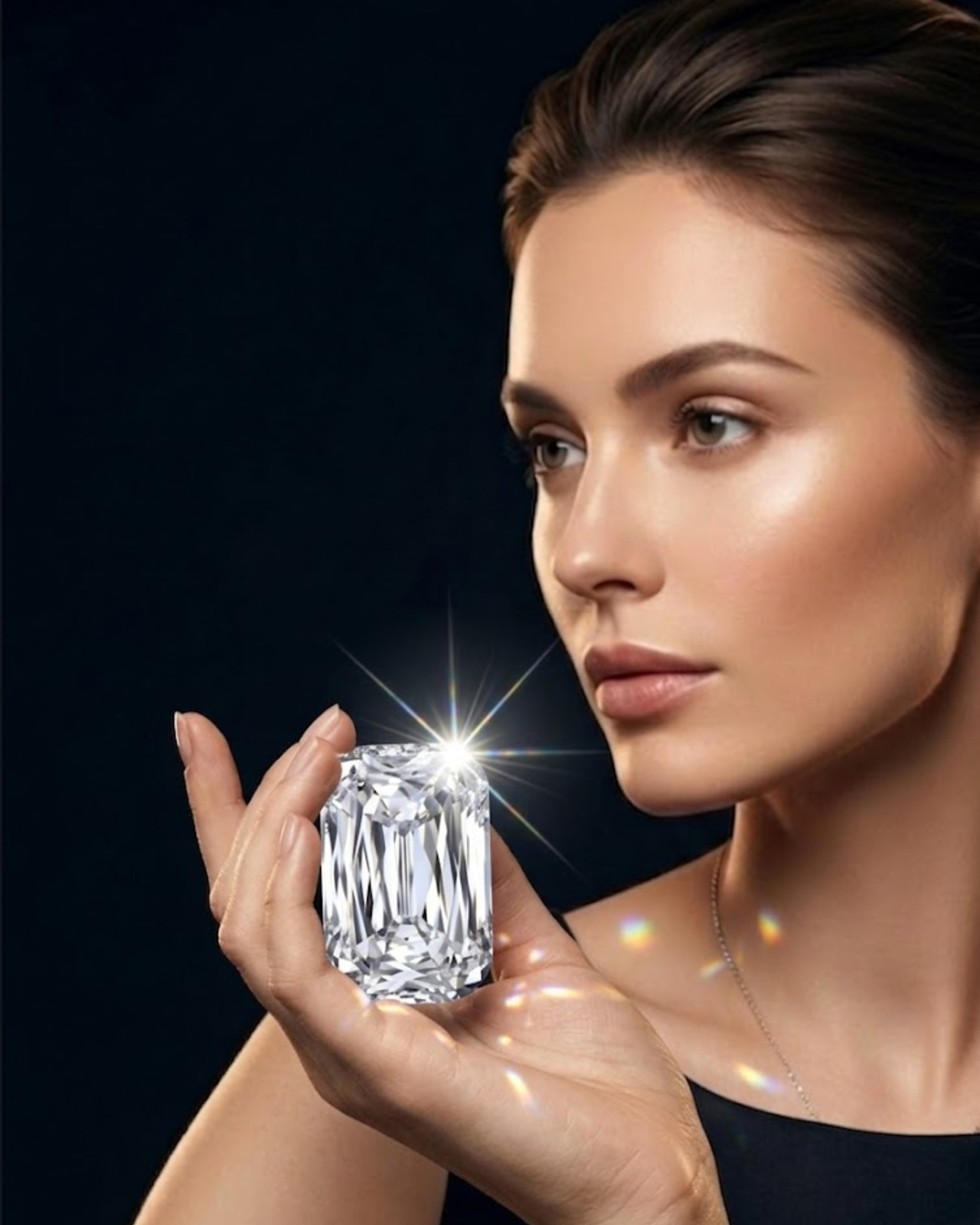
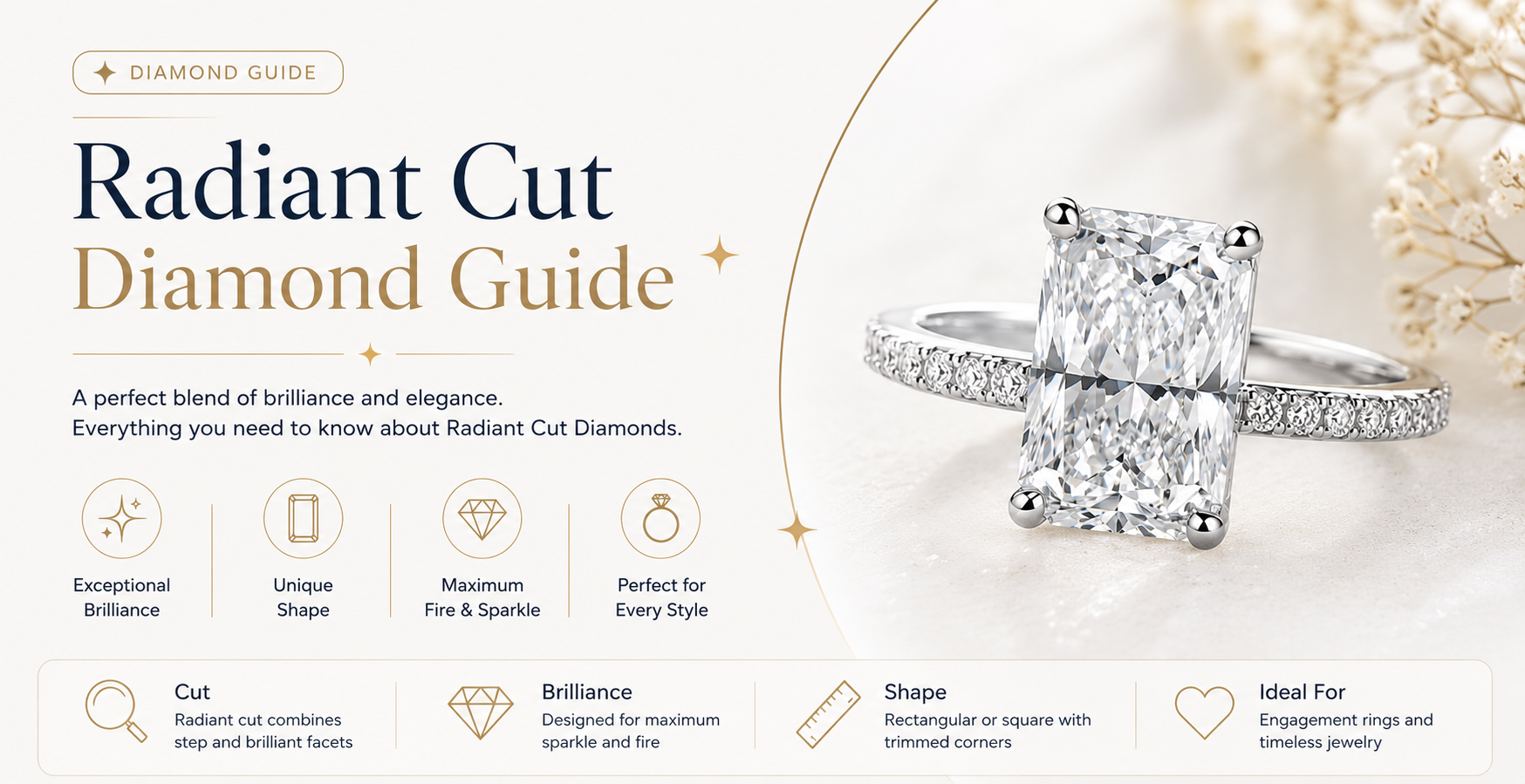
A radiant cut diamond is a square or rectangular diamond with cropped (beveled) corners and a brilliant-style facet pattern, typically featuring around 70 facets. It was invented in 1977 by master diamond cutter Henry Grossbard, who wanted to combine the clean outline of the emerald cut with the intense sparkle of the round brilliant cut.
The result is a hybrid cut that delivers:
- Exceptional brilliance and fire – among the sparkliest of all fancy shapes
- A larger face-up appearance than most shapes of the same carat weight
- Excellent durability – the trimmed corners protect against chipping, ideal for daily wear
- Great value – radiant cuts use more of the rough diamond, so they cost significantly less per carat than round brilliants
Radiant Cut Diamond: Quick Facts
| Feature | Details |
| Invented | 1977, by Henry Grossbard |
| Facet Count | ~70 facets (brilliant faceting) |
| Shape Outline | Square or rectangle with cut corners |
| Sparkle Level | Very high (crushed-ice brilliance) |
| Durability | Excellent (no sharp corners) |
| Price vs Round Brilliant | Roughly 20–40% less per carat |
| Best For | Engagement rings, pendants, earrings, statement pieces |
Radiant Cut vs Other Diamond Shapes
Beginners often confuse radiant cuts with cushion, princess, and emerald cuts. Here’s how they truly differ:
| Comparison | Radiant Cut | Cushion Cut | Princess Cut | Emerald Cut |
| Corners | Cropped/beveled | Rounded | Sharp, pointed | Cropped / beveled |
| Facet Style | Brilliant (~70) | Brilliant (58–64) | Brilliant (57–76) | Step cut (57) |
| Sparkle Type | Intense, crushed-ice | Soft, romantic | Sharp flashes | Hall-of-mirrors flashes |
| Hides Inclusions? | Very well | Well | Moderately | Poorly |
| Hides Color? | Moderately | Moderately | Moderately | Poorly |
| Durability | Excellent | Excellent | Corners can chip | Excellent |
| Vibe | Modern glamour | Vintage softness | Contemporary edge | Art Deco elegance |
Beginner takeaway: If you want maximum sparkle in a rectangular silhouette with worry-free durability, the radiant cut is the clear winner.
The 4Cs for Radiant Cut Diamonds (Beginner Cheat Sheet)
Radiant cuts behave differently from rounds when it comes to the diamond 4Cs – Cut, Color, Clarity, and Carat. Their crushed-ice faceting hides inclusions brilliantly, which means you can often buy lower clarity grades and pocket the savings.
Recommended Grades for the Best Value
| The 4Cs | Budget-Smart Pick | Premium Pick | Beginner Tip |
| Cut / Proportions | Depth 61–67%, Table 61–69% | Depth ~61–65%, Excellent polish & symmetry | Avoid depth above 69% – you pay for hidden weight |
| Color | H–I (white gold/platinum), I–J (yellow / rose gold) | G or better | Radiants retain slightly more color than rounds |
| Clarity | SI1–SI2 (eye-clean) | VS2–VS1 | Facets mask inclusions – don’t overpay for VVS |
| Carat | 1.00–1.50 ct sweet spot | 2.00 ct+ | Radiants face up larger than their weight suggests |
Length-to-Width Ratio Guide
The length-to-width (L/W) ratio defines whether your radiant looks square or elongated:
| L/W Ratio | Appearance | Best For |
| 1.00 – 1.05 | Square radiant | Bold, princess-cut alternative |
| 1.10 – 1.20 | Slightly rectangular | Balanced, versatile look |
| 1.20 – 1.35 | Classic elongated radiant | Most popular; slims the finger |
| 1.35 – 1.50+ | Long rectangle | Dramatic, east-west settings |
Most buyers in 2026 prefer ratios between 1.20 and 1.35 for that flattering, elongated look.
Radiant Cut Diamond Prices in 2026
One of the biggest reasons beginners fall in love with radiant cuts: value. Because the cutting process wastes very little rough diamond, radiants are among the most affordable fancy shapes – a comparable radiant can cost dramatically less than a round brilliant of the same color, clarity, and carat weight.
Approximate Price Ranges (G–H Color, VS2–SI1 Clarity)*
| Carat Weight | Natural Radiant Cut | Lab Grown Radiant Cut |
| 0.50 ct | $700 – $1,500 | $200 – $450 |
| 1.00 ct | $2,900 – $5,500 | $500 – $1,200 |
| 1.50 ct | $5,500 – $10,000 | $900 – $1,900 |
| 2.00 ct | $9,000 – $18,000 | $1,300 – $2,800 |
| 3.00 ct | $20,000 – $45,000 | $2,500 – $5,500 |
Hexagonal Diamond – Modern Cuts
*Indicative retail ranges as of 2026. Actual prices vary by exact grades, fluorescence, certification, and market conditions. Wholesale buyers – contact OM Jewels Inc for direct manufacturer pricing.
What Drives the Price of a Radiant Cut?
- Carat weight – prices rise exponentially, not linearly, with size
- Color grade – G–H offers the best balance of beauty and value
- Clarity – eye-clean SI stones are the smart buyer’s secret
- Proportions – well-cut stones command a 10–15% premium and are worth it
- Certification – always insist on GIA or IGI grading reports
- Natural vs lab-grown – lab-grown radiants cost roughly 80%+ less
Pros and Cons of Radiant Cut Diamonds
| Pros ✔ | Cons ✖ |
| Intense brilliance rivaling round cuts | Crushed-ice look isn’t for everyone |
| 20–40% cheaper per carat than rounds | Can retain body color in lower grades |
| Looks larger than its carat weight | No standardized GIA “cut grade” – proportions matter |
| Cropped corners resist chipping | Depth-heavy stones can hide carat weight |
| Hides inclusions exceptionally well | Fewer inventory options than rounds/ovals |
| Suits both modern and vintage settings | Requires expert selection for maximum sparkle |
Radiant Cut Trends in 2026: What’s Hot Right Now
The radiant cut is having a genuine moment. Here’s what’s trending this year:
- Rising market share. Radiant cuts now hold about 5.3% of the fancy-shape market and rank among the fastest-growing categories alongside ovals and cushions – elongated shapes that strongly appeal to younger, Gen Z buyers.
- East-west settings. A growing trend sets the radiant horizontally rather than vertically – a modern, architectural style that still showcases the stone’s brilliance.
- Three-stone glamour. Radiant centers paired with tapered baguettes, trapezoids, or half-moon side stones blend vintage inspiration with modern sparkle.
- Minimalist solitaires. Buyers are choosing clean solitaires with hidden details over elaborate halos – the radiant’s intense sparkle creates impact without an ornate setting.
- Lab-grown momentum. Lab-grown diamonds now hold about half of the US engagement ring market, and lab-grown radiants deliver dramatic size upgrades on the same budget.
Best Settings for a Radiant Cut Diamond
| Setting Style | Why It Works for Radiants |
| Solitaire (4-prong) | Clean, modern; lets the crushed-ice sparkle dominate |
| Hidden Halo | Adds sparkle from the side profile without bulk |
| Three-Stone (trapezoids/baguettes) | The defining radiant look of 2026 |
| East-West | Fashion-forward, architectural statement |
| Bezel | Maximum protection + sleek contemporary lines |
| Classic Halo | Boosts perceived size by up to half a carat |
How to Buy a Radiant Cut Diamond: 7-Step Beginner Checklist
| Step | Action | Why It Matters |
| 1 | Set your budget first | Radiants let you go bigger for less |
| 2 | Choose your ratio | Square (1.00–1.05) or elongated (1.20–1.35) |
| 3 | Prioritize proportions | Depth under 69%, table 61–69% |
| 4 | Go eye-clean, not flawless | SI1 / SI2 usually looks perfect to the naked eye |
| 5 | Match the color to your metal | H+ for white metals, I–J for yellow / rose gold |
| 6 | Demand certification | GIA or IGI reports only, with laser inscription |
| 7 | Buy from a trusted source | A direct manufacturer cuts out middleman markups |
Caring for Your Radiant Cut Diamond
- Clean at home with warm water, mild dish soap, and a soft brush
- Remove your ring during workouts, swimming, and household cleaning
- Have the prongs professionally inspected and the stone cleaned every 6 months
- Store separately in a soft pouch – diamonds can scratch other jewelry
Frequently Asked Questions (FAQ)
Is a radiant cut diamond good for beginners?
Yes – it’s one of the most forgiving shapes. Its brilliant faceting hides inclusions and delivers big sparkle at a lower price per carat, making it hard to go wrong.
Do radiant cut diamonds sparkle more than round diamonds?
A well-cut radiant comes remarkably close to a round brilliant’s sparkle, with a distinctive “crushed-ice” glitter that many buyers actually prefer.
Why are radiant cut diamonds cheaper?
The cutting process retains more of the original rough diamond, so less material is wasted – savings that pass directly to you.
Radiant vs cushion cut – which should I choose?
Choose radiant for crisp geometric lines and intense sparkle; choose cushion for softer, romantic, pillow-like curves. Durability is excellent for both.
What clarity is best for a radiant cut diamond?
SI1–SI2 is the sweet spot for most buyers – the dense faceting masks inclusions, so eye-clean SI stones look identical to VS stones at a fraction of the cost.
Are lab-grown radiant cut diamonds worth it?
If maximum size per dollar matters most, absolutely – lab-grown radiants are chemically identical to natural diamonds and cost dramatically less. If rarity and long-term value retention matter more, choose natural.
What is the ideal length-to-width ratio for a radiant cut?
1.20–1.35 for the classic elongated look most buyers prefer; 1.00–1.05 if you want a square radiant.
About OM Jewels Inc – Your Trusted Diamond Partner in NYC
OM Jewels Inc, established in 2018, is a first-generation diamond manufacturing, import, and wholesale company based in the heart of New York City’s Diamond District. We supply GIA and IGI-certified natural diamonds, lab-grown diamonds, fancy shapes, matching pairs, calibrated layouts, salt & pepper diamonds, and black diamonds to jewelers, designers, and retailers across the USA, Canada, UK, EU, UAE, Hong Kong, Singapore, Australia, and Japan.
Why buy your radiant cut diamonds from OM Jewels Inc?
- Direct manufacturer pricing – no middleman markups
- GIA & IGI certified inventory with full transparency
- Custom diamond cutting and calibrated sets on request
- Fast, fully insured global shipping
- Dedicated support for wholesale and trade buyers
Contact OM Jewels Inc
| Contact | Details |
| Address | 20 W 47th St, Suite 405, New York, NY 10036, USA |
| Phone | +1 201 680 1878 · +1 917 639 3354 |
| info@omjewelsinc.com | |
| Website | https://omjewelsinc.com |
| @omjewelsinc |
Ready to find your perfect radiant cut diamond? Browse our certified diamond inventory at omjewelsinc.com or contact our experts today for wholesale pricing, certificates, and personalized recommendations.
Related posts
Introduction If you have ever compared the price of the same diamond at a retail jewelry store and a wholesale supplier, you already know the... Continue reading
Two diamonds can share the same carat weight, the same color grade, and the same clarity – yet look completely different on the finger. One... Continue reading
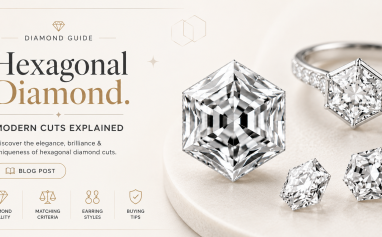
If the round brilliant is the classic little black dress of diamonds, the Hexagonal Diamond is the architectural statement piece – six equal sides, razor-clean... Continue reading
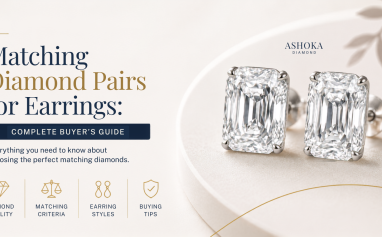
A pair of diamond earrings looks effortless when it is done right – two stones that face up identically, sparkle in unison, and sit perfectly... Continue reading
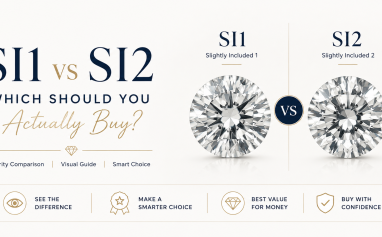
What Do SI1 and SI2 Actually Mean? On the GIA clarity scale, “SI” stands for Slightly Included – the fifth tier down from Flawless, sitting... Continue reading