No products in the cart.

Lozenge Diamond: What Jewelers Need to Know
Introduction: A Cut That’s Having a Moment Again
If a client has ever pulled up a photo of an engagement ring and said. “I don’t know what this shape is called, but I want one,” there’s a good chance they were pointing at a lozenge diamond. Once a hallmark of Art Deco design houses in the 1920s and 1930s, the lozenge. Elongated, four-sided rhombus with sharp, pointed ends – is back on jewelers’ benches and in bridal showcases worldwide.
At OM Jewels Inc, we’ve watched fancy-shape diamonds steadily gain share against round brilliants over the past several buying cycles, and the lozenge sits at the sharper, more architectural end of that movement. This guide consolidates everything a working jeweler – whether on the bench, behind the counter, or sourcing inventory – needs to know about the lozenge cut: its history, anatomy, grading nuances, pricing behavior, setting strategy, and how to sell it with confidence.
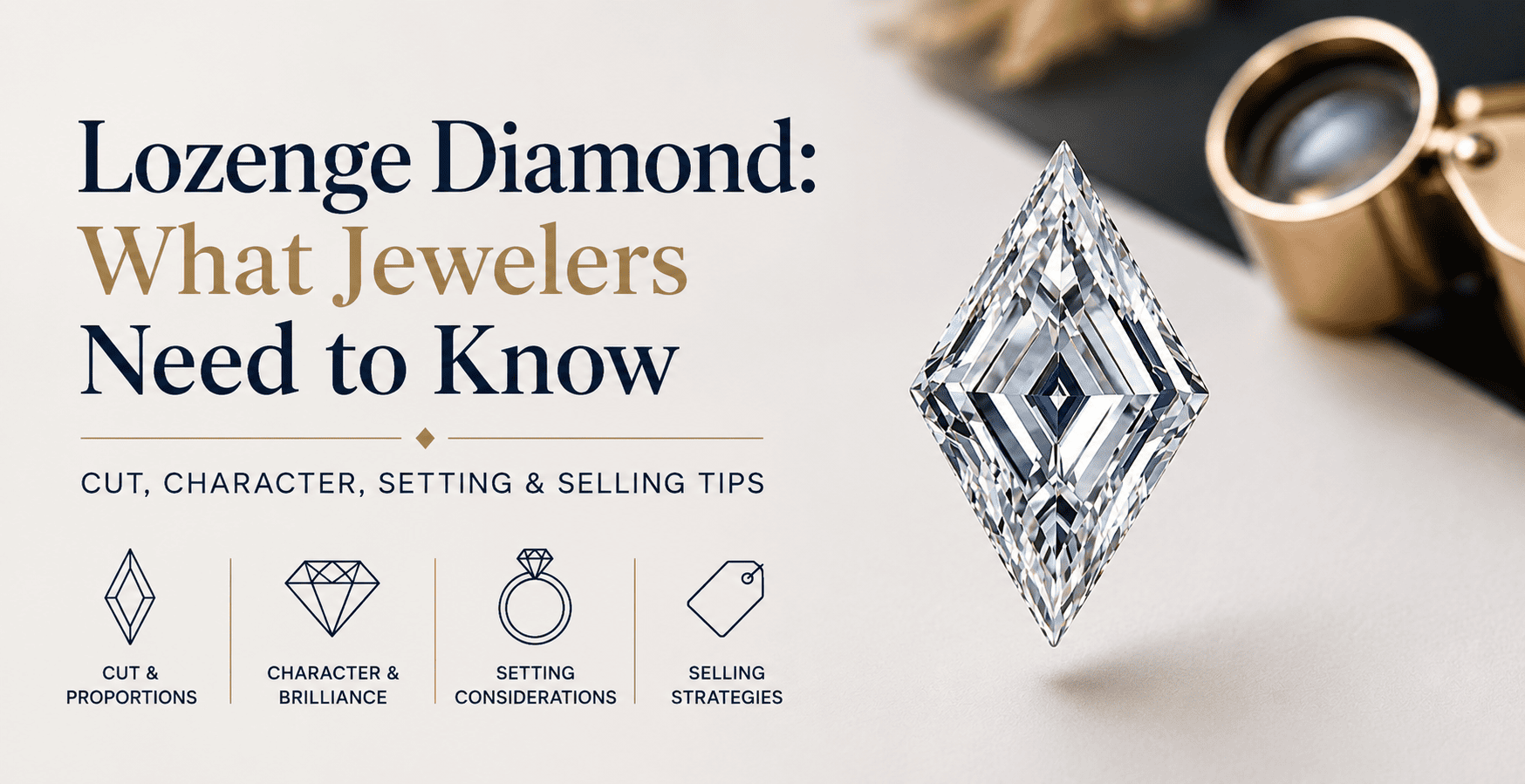
| Quick Definition A lozenge diamond is a step-cut, elongated rhombus shape with four equal-length sides and two pointed ends – visually similar to the diamond suit symbol on a playing card. It is part of the same step-cut family as the emerald and Asscher cuts, but built on a kite-like silhouette rather than a rectangle or square. |
Origins and Why the Lozenge Diamond Is Resurfacing in 2026
The name traces back to the Old French word “losenge,” a 14th-century term referring to a diamond-shaped rhombus. The cut itself, however, is most strongly associated with the glamour of the Art Deco era, when geometric, larger-than-life silhouettes defined fine jewelry design.
Today’s resurgence is being driven by three converging forces that jewelers should understand when pitching the cut to clients or stocking it for a showcase:
- Fancy-shape momentum – Industry trend reporting for 2026 shows oval diamonds now chosen by roughly a quarter of couples, nearly on par with round brilliants. A sign that fancy and elongated shapes are no longer a niche preference but a mainstream category.
- Antique-cut appetite – Step cuts and genuinely antique-style cuts (Old European, Old Mine, Rose, and by extension lozenge) are highlighted as a defining 2026 trend, prized for character and individuality over uniform brilliance.
- Protective, modern settings – Bezel and burnish settings – which pair exceptionally well with a lozenge’s pointed corners – are cited as one of the most influential engagement ring design elements of 2026, both for their look and for the protection they offer vulnerable tips.
Anatomy of the Lozenge Cut Diamond
Understanding the lozenge at the bench level means understanding what makes it both beautiful and demanding to work with.
2.1 Shape and Facet Structure
- Four equal-length sides meeting at two sharp, opposing points – the same silhouette as the diamond suit in a card deck.
- Step-cut (not brilliant-cut) faceting: large, flat, trapezoidal facets run parallel to the stone’s edges, producing a repeating “hall of mirrors” effect rather than the scattered sparkle of a brilliant cut.
- A variant – the hexagonal lozenge – replaces the sharp points with two short parallel edges top and bottom, producing an elongated hexagon silhouette instead of true points.
2.2 Light Performance: Set Expectations Early
This is the single most important conversation to have with a client before they commit. Because lozenge cut diamonds have fewer, larger facets and a more open table than brilliant cuts, they do not produce the same scintillation. Instead, expect a softer glow punctuated by broad, intermittent flashes of light. For clients chasing maximum fire and sparkle, this is a trade-off – for clients drawn to vintage elegance and geometric presence, it is exactly the point.
| Bench & Sales Tip: Because step-cut facets and an open table reveal inclusions more readily than brilliant-cut facets hide them, always show clients the stone under magnification before close. A lozenge with eye-clean clarity but a noticeable inclusion under a loupe can become a return or a trust issue post-sale. |
Grading the Lozenge Diamond: How the 4Cs Apply Differently
The standard 4Cs framework still applies, but each criterion carries shape-specific weight that buyers and graders should account for.
| 4C Factor | What to Prioritize in a Lozenge |
| Cut | Prioritize symmetry above all – precise alignment of all four sides and matching point angles. Look for a cut grade of Very Good or Excellent; asymmetry is highly visible in this elongated silhouette and cannot be disguised by faceting. |
| Clarity | Buy higher than you would for a brilliant cut of the same face-up size. The open table and large flat facets magnify inclusions, so VS clarity or better is the safer recommendation for clients prioritizing a clean face-up appearance. |
| Color | D–F (colorless) for a classic icy look; G–J (near-colorless) is a smart value play since warmth is harder to spot in step-cut faceting. Fancy colors – champagne, cognac, salt-and-pepper – lean into the vintage character of the cut at a lower price point. |
| Carat | The elongated face-up shape covers more visual finger real estate per carat than rounds or cushions. A 0.5–2.0 carat range is the typical sweet spot for engagement-ring center stones – clients can often size down a carat weight class and still get a larger-looking stone. |
Complete 4CS Diamond Guide
Sourcing and Pricing: What Jewelers Should Expect
Lozenge diamonds remain a low-volume, custom-leaning category, which directly shapes how jewelers should source and price them.
- Lower demand than round, oval, or cushion shapes generally translates into more competitive per-carat pricing for comparable 4C specifications – a useful value argument for budget-conscious clients.
- Pricing depends far more on the combined 4C profile than on the shape premium itself; don’t assume “rare shape” automatically means “expensive stone.”
- Because the shape is uncommon, most lozenge center stones are sourced as one-of-a-kind parcels rather than matched-pair inventory – budget for custom mounting work rather than off-the-shelf settings.
- Lab-grown lozenge diamonds are increasingly available and widen the carat range accessible to budget-conscious clients. Consistent with the broader 2026 shift toward lab-grown stones for value-driven buyers.
| Pro Sourcing Note for OM Jewels Partners: When quoting a lozenge center stone to a client, always pair it with a custom design consultation rather than a fixed mounting. Because no two lozenge stones are cut identically, treating the setting as bespoke – not pre-set – sets the right expectation on both price and lead time. |
Setting Styles That Work Best With a Lozenge Diamond (Center Stone)
Setting choice has an outsized impact on both how a lozenge stone wears and how protected its pointed tips are over time.
| Setting Style | Why It Works | Best For |
| Bezel Setting | Fully encircling metal protects the vulnerable pointed corners – the single biggest durability risk for this cut – while giving a clean, modern, architectural look. | Active lifestyles; modern minimalist clients |
| East-West | Laying the stone horizontally across the finger emphasizes its elongated geometry and reads as bold, contemporary, and distinct from a traditional north-south solitaire. | Statement / fashion-forward buyers |
| Three-Stone with Tapered Baguettes | Flanking baguettes echo the step-cut faceting of the lozenge center, reinforcing the Art Deco lineage while adding classic symbolism (past, present, future). | Traditional clients want vintage styling |
| Halo (Diamond or Moissanite) | A surrounding halo adds perceived size and brilliance to compensate for the lozenge’s softer light return, while framing its pointed silhouette. | Clients wanting more sparkle without changing the center shape |
Durability and Aftercare: What to Tell Clients
Diamond is diamond – a 10 on the Mohs scale, regardless of cut – but the lozenge’s sharp. Exposed points are its one genuine durability consideration, and it’s worth addressing proactively at the point of sale.
- Recommend protective settings. Bezel or prong designs with reinforced V-tips at the points reduce chipping risk substantially compared to open, unprotected corners.
- Advise against ultrasonic and steam cleaners. Soapy water and a soft brush remain the safest at-home cleaning method for step-cut stones.
- Flag extreme heat exposure. Saunas, hot tubs, and high-heat environments can affect color stability in some stones over time – advise removal beforehand.
- Recommend a jewelry-specific insurance policy. Homeowners and renters policies typically do not adequately cover fine jewelry loss, theft, or damage.
- Schedule prong/bezel checks annually. Because point-protection metalwork is doing more structural work on a lozenge than on a round brilliant, annual inspection is good practice.
Selling the Lozenge Diamond: Talking Points for the Showroom Floor
Use the following positioning when presenting a lozenge diamond to a client who is unfamiliar with the cut:
- This shape has real history – it dates back to 14th-century terminology and had its design heyday in the Art Deco 1920s and ’30s.
- Because of its elongated shape, it tends to look larger on the hand than a round or cushion stone of the same carat weight.
- It’s genuinely rare – most jewelers never carry one. So you’re not going to see this on someone else’s hand at the next wedding you attend.
- The sparkle is different by design – softer, broader flashes instead of constant fire, which is part of why collectors who love vintage style seek it out.
- We’ll set it to protect the points, so you get the dramatic silhouette without worrying about everyday wear.
How Diamond Price Change 2025-2026
Frequently Asked Questions
Is a lozenge cut the same as a kite cut?
No. A kite cut has four sides but only one axis of symmetry and a single point at the bottom, resembling a kite shape. A lozenge has two axes of symmetry and points at both the top and bottom, like a card-suit diamond.
Are lozenge diamonds more prone to chipping?
Diamond hardness itself doesn’t change with cut, but the lozenge’s sharp. Exposed corners are statistically more vulnerable to impact damage than rounded or blunted shapes. Protective settings substantially mitigate this risk.
Can lozenge diamonds be lab-grown?
Yes. Lab-grown lozenge diamonds are increasingly available from diamond cutters and widen the accessible carat and price range for budget-conscious clients.
What’s a reasonable carat range to stock or recommend?
0.5 to 2.0 carats is the typical sweet spot for engagement-ring center stones, balancing visual impact with cost and wearability.
About OM Jewels Inc
OM Jewels Inc. is a trade-focused diamond and fine jewelry resource, supporting jewelers with sourcing guidance, grading education, and design consultation for both classic and fancy-shape diamonds. This guide is part of an ongoing series helping jewelers stay current on emerging cuts, sourcing strategy, and client education for 2026 and beyond.
Related posts
When people talk about diamonds, they often focus on carat, color, and clarity. But the way a diamond is cut can have an equally important... Continue reading
Why Fancy Shape Diamonds Are the Growth Story of 2026 For most of the last century, the round brilliant was the default. It still holds... Continue reading
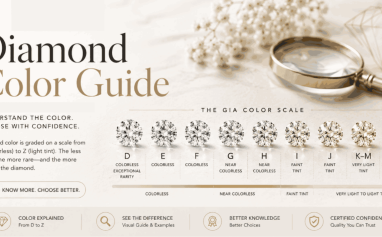
What Diamond Color Actually Measures Diamond color is one of the 4Cs, and it is the one buyers most often misunderstand. For white diamonds, the... Continue reading
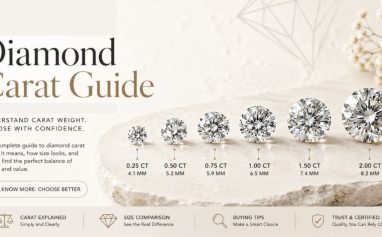
Walk into any jewelry store, and there is one word that gets asked about before anything else. Not cut. Not clarity. Carat.It makes sense. Carat... Continue reading
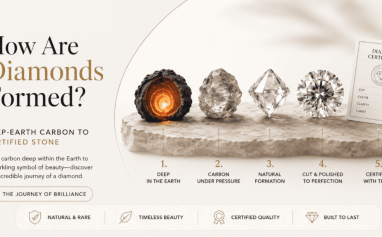
Every natural diamond you have ever seen began as carbon buried between 150 and 700 kilometres beneath your feet, crushed under pressures that would flatten... Continue reading