No products in the cart.

Lab-Grown Diamond vs Natural Diamond: Key Differences
It can feel like a big step to buy a diamond, which is the classic symbol of endless love. You are suddenly inundate with information,...

No products in the cart.
Diamonds have been wanted and revered for generations due to their outstanding raw beauty and distinctive features, including hardness and brightness. They have been used as the ultimate symbol of prosperity, ever-lasting love, and power throughout history, and continue to retain a special place in current society. There is much more to diamonds than meets the eye, despite the fact that they are frequently thought of as an iconic gemstone to be used in fine and bridal jewelry.
In actuality, it can be difficult and complicated to comprehend the main elements that affect a diamond’s value and beauty, particularly for people who are unfamiliar with this subject. The 4Cs of diamonds—cut, clarity, color, and carat—have been compiled by our team of professionals at OM Jewels Inc. Now let’s get started!
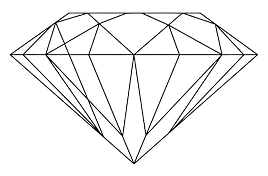
The cut is one of the most significant quality criteria of a diamond, as it impacts the diamond’s optical and physical attributes including brilliance – how a diamond reflects light and “sparkles.”
Diamond cut refers to how the jeweler physically cuts the diamond stone into its shape as well as the proportions and symmetry that achieve optimal light dispersion, which affects a diamond’s quality and price. In contrast, diamond shape only refers to the diamond’s form as a whole, such as heart, round, princess, or oval.
When assessing the quality of a diamond’s cut, brilliance—the diamond’s ability to reflect light—is a crucial consideration. In fact, a badly cut diamond will appear dull and lose light.
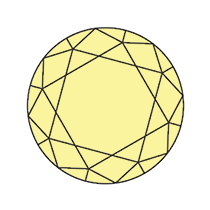
The round brilliant, the most popular cut, has 58 facets—small, flat, polished planes—that are intended to reflect as much light as possible back to the observer.



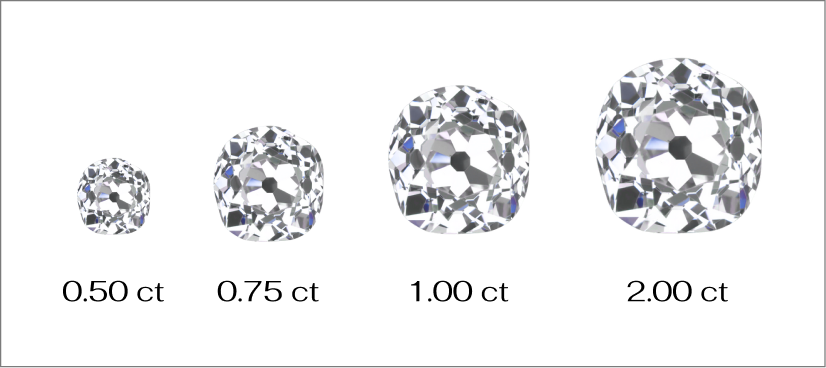
This is the term for the diamond’s weight. It can be stated as carats, or ct., or cts. A metric carat is 200 milligrams (a lot less than you’d imagine, right?). Each carat is divided into 100 ‘points,’ which is why jewelers sometimes use the term ‘pointer”. This would be mentioned by jewelers such as in the case of a diamond weighing .25cts, as a “25 pointer”.
Every point will raise the diamond’s price, all other things being equal. However, you may have two diamonds that weight the same carat weight, but have drastically different costs and worth, depending on the other 3C’s- clarity, cut and color.
The larger the carat weight of the diamond, normally the more expensive, because bigger diamonds are more uncommon. Especially when the diamond has good color and clarity, the price will greatly increase.
Diamonds appear in every color of the spectrum, but the most popular are colorless. Truly colorless, pure white diamonds are exceptionally rare and, thus, the most pricey. Laboratories, like the Gemological Institute of America (GIA), assess a diamond’s color using a color scale depending on how far they stray from the purest white.
The greatest way to view the real color of a diamond is by staring at it against a white surface. Colorless diamonds are rated D, E or F. All three grades are considered colorless although with somewhat decreasing transparency. Each letter of the alphabet represents a slightly warmer or deeper hue as color grading progresses down the alphabet.

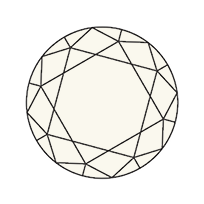
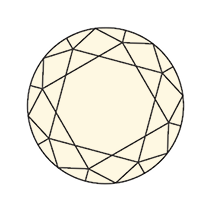
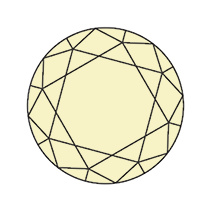
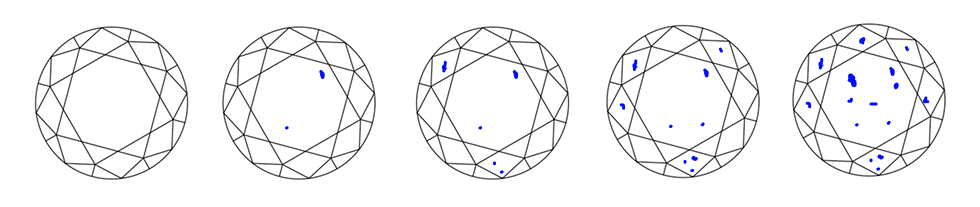
The clarity of a diamond speaks to the quantity of inherent defects, called inclusions, present in a stone and whether you can detect them with the untrained eye. The GIA grading system rates diamonds from Flawless (FL) to Included (I). However, a stone doesn’t have to be at the very top of the scale—Flawless or Very Very Slightly Included (VVS)—to seem faultless and inclusion-free.
It all comes down to how clean the diamond looks, and according to Mills, this is what typically catches people off guard when they see diamonds in person. In fact, if a SI1 (Slightly Included) clarity diamond seems exactly eye-clean, there is no obvious difference between a VVS1 (Very Very Slightly Included) clarity stone of the exact same carat, color, and cut—minus about tens of thousands of dollars.
In summary, you can choose diamonds depending on their weight, but it’s important to note that this characteristic by itself does not make a piece genuinely valuable. You should also pick a gemstone with fewer flaws and blemishes so that it can reflect light wonderfully.
Since the cut will deal with the proportions, symmetry, and polishing of the shape, it is nearly impossible to discuss diamond fire without mentioning its significance. Last but not least, it would be excellent to have a color in mind; diamonds can run from colorless to pale yellow or brown.
In order to make a successful purchase, you need to keep in mind that the 4Cs interact in complex ways and that a healthy balance between them is considered the ideal goal. Finding a diamond that fits your lifestyle and your unique demands and preferences is crucial, though.
Additionally, a wonderful method to start would be to get in touch with a team of professional jewelers to select the diamond stone of your dreams.
The 4Cs (Cut, Color, Clarity, and Carat weight) are the global standards for judging the quality of a diamond. Established by the GIA, these four factors determine a diamond’s beauty, rarity, and price. Understanding those helps you balance your budget with the look you want.
Most experts agree that Cut is the most important C. A diamond with perfect color and clarity will still look dull if it is poorly cut. A high-quality cut ensures the stone reflects light beautifully, giving it that iconic sparkle and “fire.”
Not exactly. Carat refers to the weight of the diamond, not its physical dimensions. While a higher carat weight usually means a larger stone, two diamonds of the same weight can look different in size depending on their shape and how they are cut.
The GIA color scale ranges from D (Colorless) to Z (Light Yellow/Brown).
Clarity measures the tiny “birthmarks” inside a diamond called inclusions or on its surface called blemishes.
Yes. Lab-grown diamonds are real diamonds, so they are graded on the exact same 4Cs scale as mined diamonds. When you buy a lab diamond, you will receive a grading report (like from IGI or GIA) that lists its specific Cut, Color, Clarity, and Carat weight.