No products in the cart.

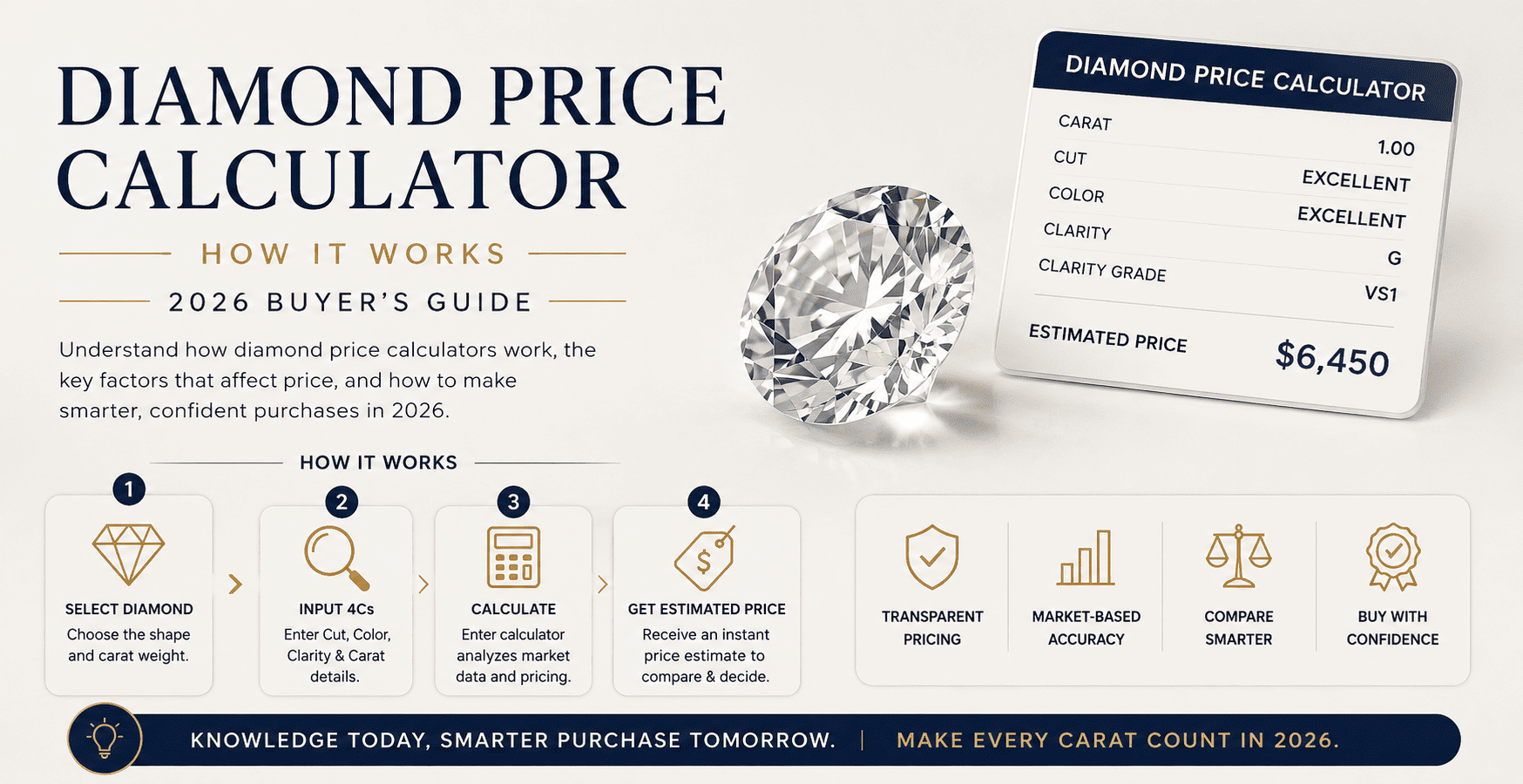
Diamond Price Calculator How It Works – 2026 Buyer’s Guide
Ever wondered why two diamonds that look almost identical to the naked eye can carry price tags thousands of dollars apart? The answer lies in a precise, data-driven pricing system that jewelers and online retailers use every day: the diamond price calculator. At OM Jewels Inc, we believe every buyer deserves to understand exactly how that number on the price tag is calculated, so this guide breaks the process down step by step, with the latest 2026 market data included.
What Is a Diamond Price Calculator?
A diamond price calculator is a pricing tool – used by jewelers, certification-linked marketplaces, and consumers alike – that estimates a diamond’s market value by combining several inputs: the 4Cs (Cut, Color, Clarity, Carat), the certification authority (GIA, IGI, or AGS), the diamond’s origin (natural or lab-grown), and live market indices such as the Rapaport Diamond Price List. Rather than relying on a single fixed price chart, modern calculators pull from real-time wholesale and retail data so the estimate reflects what is actually happening in the market this month, not last year.
At OM Jewels Inc, our in-house calculator cross-references certified stone data with current index movements, giving customers a transparent, defensible price range before they ever step into a showroom.
Must Read: 4CS Guide
The 4Cs: The Foundation of Every Price Estimate
Every diamond price calculation begins with the 4Cs. Each factor moves the price independently, and small grade changes can shift the final number by 10-30% or more.
| Factor | How It Affects Price |
| Carat | Price rises non-linearly with weight. Rough stones above 2 carats are exponentially rarer, so price per carat jumps sharply at common ‘magic number’ sizes (1.00ct, 1.50ct, 2.00ct, 3.00ct). |
| Cut | The only human-controlled C. An Excellent/Ideal cut commands a 10-15% premium for superior brilliance; a Poor or Fair cut is discounted because light leaks out instead of reflecting back. |
| Color | Graded D (colorless) to Z (light yellow). D-F stones sit at the top of the price curve; each step down typically softens price, though I-K with light blue fluorescence can look whiter than the grade suggests. |
| Clarity | Measures internal and surface inclusions, from Flawless (FL) to Included (I3). VS1-VS2 offers the best value-to-eye-clean ratio for most buyers; visible inclusions at SI2 and below pull the price down. |
VVS vs VS Diamond Clarity: Which Should You Buy
How the Diamond Price Calculator Works: The Formula Behind the Number
Behind every estimate is a layered formula. Here is the simplified logic our calculator – and most industry tools – follow:
| The Core Pricing Formula Step 1 – Base Rate: Start with the current per-carat market rate for the stone’s color and clarity grade, pulled from a live index (e.g., Rapaport or IDEX). Step 2 – Carat Multiplier: Multiply the base rate by carat weight, applying a non-linear curve so larger stones cost disproportionately more per carat. Step 3 – Cut Adjustment: Add or subtract 5-15% based on cut grade (Excellent through Poor). Step 4 – Certification Premium: Apply a small premium for GIA/AGS-certified stones versus other labs, reflecting buyer confidence. Step 5 – Origin Factor: Apply a natural-vs-lab-grown multiplier – lab-grown stones are currently priced 65-85% below natural equivalents at the same specification. Step 6 – Market & Retail Adjustment: Factor in current index movement, regional tariffs, and retailer markup to reach the final consumer price. |
Formula in short: Final Price ≈ (Per-Carat Base Rate × Carat Weight^growth-curve) × Cut Factor × Certification Factor × Origin Factor × Market Adjustment.
Latest 2026 Diamond Market Data
Diamond pricing has moved significantly through 2025 into 2026, and any calculator that isn’t pulling current data will give you a stale answer. Here is where the market stands right now.
| Carat Weight | Natural (D-F, VS, Ideal) | Lab-Grown (D-F, VS, Ideal) |
| 0.50 ct | ~$1,006 | ~$407 |
| 1.00 ct | ~$3,690 | ~$759 |
| 1.50 ct | ~$8,179 | ~$1,151 |
| 2.00 ct | ~$16,604 | ~$1,610 |
| 3.00 ct | ~$39,280 | ~$2,365 |
Key 2026 market movements to know:
- The Rapaport Diamond Price Index recorded an overall decline of about 11.3% for 1-carat natural diamonds across 2025, though large, rare, and fancy-colored stones (7-15 carats) held firm or gained value.
- Lab-grown diamond retail prices have fallen roughly 88% since January 2020, and Q1 2026 showed the smallest quarter-over-quarter decline in eight quarters – suggesting prices are approaching a production cost floor.
- Lab-grown diamonds accounted for an estimated 61% of US engagement ring center-stone purchases in 2026, with the global lab-grown market projected to reach $33.9 billion in 2026.
- US wholesale natural diamond pricing reached roughly $4,456 per carat in Q1 2026, supported by selective retailer demand for higher-value certified stones rather than entry-level goods.
- Nearly 60% of luxury buyers now factor ethical sourcing and mining practices into their purchase decision, adding a sustainability premium natural diamonds.
Natural vs. Lab-Grown: How Origin Changes the Calculation
Origin is now one of the single biggest swing factors in any price estimate. The table below summarizes how each type behaves inside a price calculator.
| Factor | Natural Diamond | Lab-Grown Diamond |
| Price Trend (2025-26) | Relatively stable to softening for commercial grades; strong for rare/large stones | Steep historical decline, now stabilizing near a price floor |
| Typical 1ct Premium | 4.9x lab-grown at comparable quality | Baseline (lowest cost per spec) |
| Resale Value | Holds value better for rare, certified, high-grade stones | Minimal resale market; valued mainly for personal use |
| Best For | Investment, heirloom pieces, brand-conscious buyers | Budget-conscious buyers want a larger visible size |
Hidden Factors a Good Diamond Price Calculator Should Include
A carat chart alone can be misleading. The most accurate calculators – including the one OM Jewels Inc uses for client consultations – also weigh:
- Fluorescence: Strong fluorescence in D-F color stones can cause a 15-25% discount due to a hazy appearance, while mild fluorescence in I-K stones can be a hidden win.
- Certification authority: A GIA-graded stone commands a premium over an identically graded IGI stone, reflecting grading consistency and resale confidence.
- Regional duties and tariffs: Import tariffs (such as the 50% US tariff on certain natural diamond imports implemented in 2025) directly affect retail pricing by region.
- Inventory supply: A glut of a specific carat weight in market databases (e.g., 2-carat stones) can soften prices for that size specifically, independent of quality.
Worked Example: Calculating a Real Price
To see the formula in action, here is a simplified walkthrough for a 1.00 carat, G color, VS2 clarity, Excellent cut, GIA-certified natural diamond:
| Step | Calculation | Running Price |
| 1. Base rate | G/VS2 base rate ≈ $3,300/ct × 1.00 ct | $3,300 |
| 2. Cut adjustment | Excellent cut adds +12% | $3,696 |
| 3. Certification premium | GIA adds +5% over generic lab | $3,881 |
| 4. Market adjustment | Current index trend −2% (soft 1ct segment) | $3,803 |
The same stone in lab-grown form, at an identical specification, would start from a base rate roughly 75-80% lower and skip the scarcity-driven market swings entirely, landing closer to $750-$900 total. This is exactly the kind of side-by-side breakdown our calculator produces for every client inquiry at OM Jewels Inc.
Frequently Asked Questions
Is a diamond price calculator accurate for resale value?
A calculator gives a strong estimate for retail purchase price, but resale value depends heavily on buyer demand at the time of resale, which is typically lower than retail for both natural and lab-grown stones.
How often should I check current pricing? Because indices like Rapaport and IDEX update monthly (and sometimes weekly), check pricing again if more than 4-6 weeks have passed since your last estimate, especially for natural diamonds above 1 carat.
Can I trust an online calculator without seeing the stone? Online estimates are a great starting point, but final pricing should always be confirmed against the stone’s actual certificate and a physical or video inspection – something our OM Jewels Inc specialists handle for every order.
Why Choose OM Jewels Inc?
OM Jewels Inc combines real-time market data with decades of gemological expertise to give every client a transparent, defensible price estimate – never a guess. Whether you are comparing a natural heirloom-quality stone or a budget-conscious lab-grown diamond, our calculator and our certified specialists walk you through every line of the pricing formula before you buy. We source only GIA- and IGI-certified stones, and our pricing is benchmarked against live indices including Rapaport and IDEX, so you always know you’re paying a fair, current-market price.
Get in Touch with OM Jewels Inc
Have a specific stone in mind, or want a free, personalized price estimate? Our gemologists are ready to help.
| Contact OM Jewels Inc Website: www.omjewelsinc.com Email: info@omjewelsinc.com Phone: +1 (800) 555-0193 | +12016801878 Location: 5th Avenue Diamond District, New York, NY 10001 |
Related posts
When people talk about diamonds, they often focus on carat, color, and clarity. But the way a diamond is cut can have an equally important... Continue reading
Why Fancy Shape Diamonds Are the Growth Story of 2026 For most of the last century, the round brilliant was the default. It still holds... Continue reading
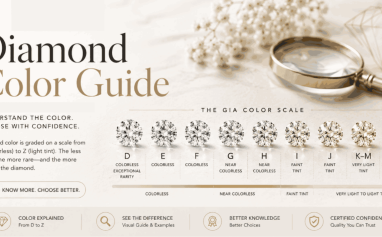
What Diamond Color Actually Measures Diamond color is one of the 4Cs, and it is the one buyers most often misunderstand. For white diamonds, the... Continue reading
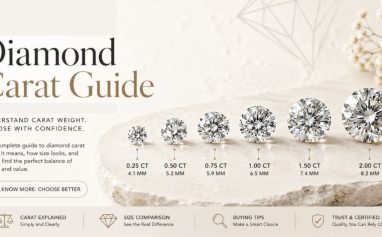
Walk into any jewelry store, and there is one word that gets asked about before anything else. Not cut. Not clarity. Carat.It makes sense. Carat... Continue reading
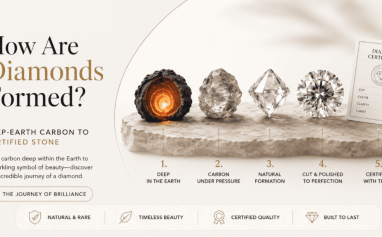
Every natural diamond you have ever seen began as carbon buried between 150 and 700 kilometres beneath your feet, crushed under pressures that would flatten... Continue reading