No products in the cart.

Diamond Matching Pairs for Engagement Rings: The Complete 2026 Guide
Introduction
The center diamond gets all the attention. But here’s what most buyers don’t realize: the side stones are what separate a good engagement ring from a stunning one.
Diamond matching pairs – two diamonds selected to be virtually identical in size, shape, color, and brilliance 4CS diamond guide – are the secret weapon of every high-end engagement ring designer. When done right, the entire ring glows as one unified piece. When done wrong, even the most expensive center stone looks off-balance.
This guide covers everything: how pairs are matched, which shapes work best for which ring styles, the right carat ratio, natural vs lab-grown options, and what to look for when buying. Whether you’re a jeweler sourcing side stones or a buyer designing a custom ring, this is the only guide you need.
💎 OM Jewels Inc is a GIA-certified diamond manufacturer and wholesaler based in New York – the heart of the U.S. diamond district. Every matching pair in our inventory is hand-selected for precision matching across all 5 criteria below.
What Are Diamond Matching Pairs?
A diamond matching pair is two loose diamonds that have been carefully selected and graded to appear virtually identical when placed side by side. The goal is perfect visual harmony – both stones should look like they were cut from the same rough crystal.
Matching pairs are used in three main ways:
- Side Stones: As side stones flanking a center diamond in a three-stone engagement ring
- Earrings: As the main stones in diamond stud earrings
- Multi-stone designs: In five-stone rings, eternity bands, and bespoke fine jewelry layouts
For engagement rings specifically, matched pairs sit on either side of the center diamond. Even a tiny difference – a slightly different shade of yellow, a heavier inclusion on one stone – becomes immediately visible when both diamonds are set millimeters apart. This is why matching quality matters so much.
📖 Industry term: Perfectly matched diamond pairs used as side stones are also called ‘calibrated side stones’ or ‘matched accents’ in the trade.
Why Side Stone Matching Makes or Breaks an Engagement Ring
Most buyers focus 100% of their attention on the center stone. But consider this: in a three-stone ring, the side stones occupy roughly 40% of the ring’s visual footprint. Mismatched side stones don’t just look bad – they actively diminish the center diamond.
Here’s what mismatched side stones do to a ring:
- Color mismatch: One stone looks slightly yellow while the other looks white, creating an uneven, dirty appearance
- Cut mismatch: One stone sparkles; the other looks dull because it was cut differently
- Size mismatch: The ring looks lopsided and off-center
- Clarity mismatch: The eye constantly compares the two stones instead of admiring the center
Perfectly matched pairs do the opposite. They frame the center diamond, amplify its brilliance with light reflected from three angles, and create a ring that looks cohesive, luxurious, and intentional.
3. The 5 Criteria Experts Use to Match Diamond Pairs
Professional diamond wholesalers use five strict criteria when building matching pairs. Understanding these will help you evaluate any pair you’re considering.
Criterion 1: Shape & Cut
Both diamonds must be the same shape (pear, baguette, half-moon, etc.) and cut style (brilliant, step-cut, mixed). Even two pear-shaped diamonds can look different if one has a longer, narrower body than the other. Proportions – length-to-width ratio, table percentage, depth – must closely align.
Criterion 2: Color Grade
This is the most visually obvious mismatch. Side stones should be within one color grade of each other – ideally, the same grade. They should also be within one to two grades of the center stone. A G-color center stone paired with J-color sides will create an unflattering yellow contrast.
Criterion 3: Clarity Grade
While clarity matters less than color for visual matching (inclusions are harder to spot from a distance), both side stones should have the same clarity range. An SI1 paired with a VS2 is generally fine; an SI2 paired with an IF will look noticeably different under any light.
Full Guide For 4CS
Criterion 4: Measurements & Dimensions
Both stones must have nearly identical millimeter dimensions – length, width, and depth. A difference of more than 0.1–0.15mm becomes visible when stones are set side by side. This is especially critical for step-cut shapes like baguettes and emerald cuts where precise geometry is everything.
Criterion 5: Visual & Optical Appearance
The final and most important check: an expert holds both stones side by side under consistent lighting and compares them visually. This catches differences that grading numbers don’t – slight variations in brilliance, facet pattern consistency, windowing in fancy cuts, and overall ‘life’ of the stone.
✅ At OM Jewels Inc, every pair goes through all 5 criteria before listing. We source directly from our own cutting facility, which allows us to produce matched pairs with far tighter tolerances than secondary market sourcing.
4. Carat Ratio Guide: How Big Should Side Stones Be?
One of the most common questions jewelers and buyers ask: What size should the side stones be relative to the center diamond? The answer depends on the ring style and the desired visual effect.
The most widely accepted traditional ratio is 1:0.5:1 – meaning each side stone is approximately half the carat weight of the center stone. For a 1.00 ct center diamond, each side stone would be ~0.50 ct.
| Ring Style | Side Stone Ratio | Example (1ct center) | Visual Effect |
| Classic Three-Stone | 1/2 of center | ~0.50 ct each | Balanced, timeless |
| Modern Bold | 1/3 of center | ~0.33 ct each | Center-focused, sleek |
| Statement / Equal | Equal to center | ~1.00 ct each | Maximum impact |
| Delicate / Minimalist | 1/4 of center | ~0.25 ct each | Subtle, refined |
| Baguette Side Stones | 1/4 to 1/3 of center | ~0.25–0.33 ct each | Architectural, elegant |
Important: carat weight alone doesn’t determine visual size. A pear-shaped side stone and a round brilliant of the same carat weight look very different in a ring. Always evaluate measurements (mm dimensions) alongside carat weight when selecting side stones.
💰 Pro Tip: If your center stone is GIA F-color, VS1, consider side stones graded G–H, VS1–VS2. This gives you a near-identical appearance at a meaningfully lower cost – a strategy used by professional ring designers worldwide.
5. Best Diamond Shapes for Engagement Ring Side Stones
Not every diamond shape works equally well as a side stone. The best choices complement the center diamond without competing with it, and allow for a secure setting. Here are the most popular options:
Tapered (Most Popular)
The most classic side stone choice. Taper Diamond Pair is rectangular step-cut diamonds that taper slightly toward the girdle. Their clean geometry and understated elegance make them pair beautifully with almost any center stone. They emphasize the center diamond without drawing attention away from it.
Trapezoid
Trapezoid-diamond pairs are four-sided step-cut diamonds that taper toward the band. They work especially well with cushion, radiant, and princess-cut center stones, creating a clean geometric frame. Trillion (triangular) side stones add drama and work beautifully with round or oval centers.
Pear Shape
Pear-shaped side stones oriented with the point toward the band create an elegant, flowing look. They pair perfectly with oval, round, and pear-shaped center stones. One important note: pear shapes require a V-prong at the tip to prevent chipping – work with an experienced setter.
Half Moon
Half-moon diamond pairs have a flat, straight edge and a curved outer edge, creating a crescent shape. They hug round, oval, and cushion centers beautifully and create an almost halo-like encircling effect. A premium choice for vintage-inspired and Art Deco designs.
Trillion / Trilliant
Trillions offer serious sparkle and a modern, geometric look. They work well flanking round, cushion, or oval centers and are popular in contemporary engagement ring designs. Available in both brilliant and step-cut variations.
Kite Cut (Specialty)
A distinctive four-sided shape with brilliant faceting. Kite cuts are chosen by designers who want individuality — they create a bold, artistic frame for fancy-shaped center stones like emerald cuts and cushions. OM Jewels Inc specializes in kite cut matching pairs.
Cadillac Cut (Specialty)
The Cadillac diamond match pair is a rectangular step-cut shape with sharp-angled corners – a blend of baguette and emerald cut aesthetics. It’s ideal for statement rings, luxury earrings, and bespoke designs. Cadillac pairs command attention and works especially well in Art Deco-inspired settings.
Ashoka / Criss Cut (Specialty)
The Ashoka-inspired cut features an elongated silhouette with distinctive cross-style faceting that produces exceptional brilliance. It sits between a step cut and a radiant cut optically. Criss Ashoka matching pairs from OM Jewels Inc are a signature product – precise, brilliant, and unique. You must know how to verify diamond certification.
6. Shape Pairing Chart: Center Stone → Best Side Stone Matches
| Center Stone Shape | Best Side Stone Match | Alternative Options | Avoid |
| Round Brilliant | Tapered Baguette, Pear, Trillion | Half Moon, Round | Marquise |
| Oval | Pear (point-in), Half Moon, Trillion | Tapered Baguette | Princess Cut |
| Cushion | Trapezoid, Kite, Half Moon | Trillion, Tapered Baguette | Elongated shapes |
| Emerald Cut | Cadillac, Baguette, Trapezoid | Trillion, Kite | Round, Pear |
| Princess Cut | Trapezoid, Tapered Baguette | Princess, Half Moon | Organic shapes |
| Pear Shape | Pear (point-in), Trillion | Half Moon, Round | Step cuts |
| Radiant | Trapezoid, Kite, Half Moon | Trillion, Tapered Baguette | Round |
| Marquise | Trillion, Pear | Half Moon | Square cuts |
| Asscher | Trapezoid, Cadillac, Baguette | Kite, Half Moon | Brilliant cuts |
7. Natural vs Lab-Grown Diamond Matching Pairs: Full Comparison
Both natural and lab-grown diamonds are real diamonds – identical in chemical composition (pure carbon), hardness (10 on Mohs scale), and optical properties. The difference is origin and, importantly, price and matching consistency.
| Feature | Natural Diamond Pairs | Lab-Grown Diamond Pairs |
| Origin | Formed in Earth over billions of years | Grown in lab (CVD or HPHT process) |
| Certification | GIA, IGI, AGS | IGI, GIA (lab-grown reports) |
| Matching Difficulty | Harder — natural variation | Easier — controlled production |
| Price (per pair) | Higher — rarity premium | 30–70% less than natural equiv. |
| Resale Value | Retains more long-term value | Depreciation faster currently |
| Color Consistency | May vary slightly | Very consistent |
| Clarity Consistency | Natural inclusions vary | Fewer inclusions typical |
| Sustainability | Mining impact (varies by source) | Lower environmental footprint |
| Best For | Luxury, traditional, heirloom rings | Modern, budget-conscious, eco buyers |
| Popular With | High-end NYC jewelers | Contemporary designers |
At OM Jewels Inc, we carry both natural and lab-grown matching pairs across all major fancy shapes. Our lab-grown pairs are IGI-certified and produced using CVD technology, offering exceptional color and clarity consistency ideal for exacting matching standards.
Complete guide for natural vs lab-grown diamond
⚖️ Both options are equally valid choices. The best decision depends on your priorities: budget, values, and the long-term story of the ring. We never push one over the other – we help you find the right pair for your design.
8. Popular Fancy Cut Matching Pairs at OM Jewels Inc
As a New York City diamond manufacturer and wholesaler, we produce and hand-select matching pairs in the following specialty cuts. These are available to jewelers and designers wholesale:
✦ Kite Cut Brilliant Pair
Specs: 0.87 ct, I color, VVS2
Maximum sparkle with distinctive kite silhouette. Brilliant faceting for superior light performance. Perfect for modern statement rings and designer earrings.
✦ Criss Ashoka Cut Pair
Specs: 0.84 ct, H color, VS1
Elongated Ashoka-inspired shape with cross-style faceting. Exceptional brilliance with step-cut elegance. A rare and distinctive choice for bespoke fine jewelry.
✦ Cadillac Diamond Pair
Specs: 0.85 ct, H color, SI1
Rectangular step-cut with sharp angular corners. Vintage meets modern – perfect for Art Deco and statement designs. Strong visual identity for designer pieces.
✦ Half Moon Natural Pair
Specs: 0.76 ct, I color, VVS2
Premium natural diamonds with curved silhouette. Ideal for hugging round and oval center stones. Sourced and matched in-house at our NYC facility.
9. How to Buy Diamond Matching Pairs: The Buyer’s Checklist
Whether you’re a jeweler sourcing for a client or a buyer building a custom ring, use this checklist before purchasing any matching pair:
- Certification: Both stones should be certified by GIA or IGI. Avoid uncertified pairs — you have no independent verification of the grades.
- Color Match: Both stones should be the same color grade, or within one grade. Compare them side by side under daylight-equivalent lighting.
- Dimensions Match: Request the millimeter measurements for both stones. Length, width, and depth should be within 0.1mm of each other.
- Shape Consistency: The outline, proportions, and length-to-width ratio must match visually. Two pear shapes can vary significantly in their curvature and tip angle.
- Cut Quality: Both stones should have the same cut grade (Excellent or Very Good). A well-cut stone will outsparkle a poorly-cut stone of the same color, making the pair look uneven.
- Clarity Inspection: Request loupe-clean photos of both stones. Inclusions near the edges or tables can affect brilliance.
- Source Transparency: Know where the diamonds come from. Reputable wholesalers and manufacturers (like OM Jewels Inc) can trace stones back to their origin.
- Return Policy: Any reputable diamond supplier should offer at least a 7–14-day return window for pairs that don’t match your expectations on receipt.
10. Price Guide: What Do Diamond Matching Pairs Cost in 2026?
Pricing for matching pairs varies widely based on total carat weight, shape complexity, color/clarity grades, and whether the diamonds are natural or lab-grown. Below are approximate 2026 wholesale ranges for certified pairs from a direct manufacturer:
| Pair Type | Total Carat Weight | Color / Clarity | Approx. Wholesale Price |
| Round Brilliant (Natural) | 0.40–0.60 ctw | G–H / VS1–VS2 | $800–$2,200 |
| Tapered Baguette (Natural) | 0.30–0.50 ctw | G–I / VS–SI1 | $500–$1,500 |
| Pear Shape (Natural) | 0.50–0.80 ctw | G–H / VS2–SI1 | $1,200–$3,500 |
| Half Moon (Natural) | 0.60–1.00 ctw | H–I / VVS–VS | $1,500–$4,000 |
| Kite Cut (Natural) | 0.70–1.00 ctw | H–I / VVS–VS1 | $1,800–$4,500 |
| Cadillac / Ashoka (Natural) | 0.70–1.00 ctw | G–H / VS1–SI1 | $2,000–$5,500 |
| Round Brilliant (Lab-Grown) | 0.40–0.60 ctw | E–F / VVS | $300–$800 |
| Pear Shape (Lab-Grown) | 0.50–0.80 ctw | E–G / VVS–VS | $500–$1,600 |
| Fancy Cut (Lab-Grown) | 0.70–1.00 ctw | F–H / VS | $600–$2,000 |
Note: Retail prices are typically 2–3x wholesale. Buying directly from a diamond manufacturer like OM Jewels Inc gives jewelers and custom ring designers access to wholesale pricing with no middleman markup.
1 to 10 carat natural diamond price guide
11. 2026 Engagement Ring Trends & Side Stone Styles
Side stone preferences evolve with engagement ring trends. Here’s what’s driving demand in 2026:
- Three-stone revival: Three-stone rings are experiencing a strong revival, with couples choosing mixed shapes – an oval center flanked by kite or trapezoid sides – for a contemporary look
- Step-cut contrast: Emerald or baguette-cut side stones flanking oval or cushion centers are popular for their geometric contrast and Art Deco feel
- Geometric side stones: Kite-shaped and trillion side stones add a contemporary edge to the classic trilogy concept
- Yellow gold resurgence: Yellow gold is back, creating demand for warmer-colored (G–J) side stones that complement yellow metal
- Intimate detail work: Hidden halos, micro-pavé beneath side stones, and milgrain edges are adding detail without increasing side stone size
- Vintage-inspired pairs: Vintage-inspired half-moon diamond pairs are in demand for their ability to hug round and oval centers with organic elegance
📈 2026 key insight: The most searched side stone combination in the US this year is an oval center diamond with pear-shaped or trillion-cut matching pair side stones in a platinum or yellow gold three-stone setting.
Conclusion
Diamond matching pairs are the unsung heroes of a beautiful engagement ring. While the center stone commands the spotlight, perfectly matched side stones create the frame that makes everything look intentional, balanced, and extraordinary.
Whether you choose natural diamond pairs for their rarity and tradition, or lab-grown pairs for their precision matching and value, the principles are the same: match on all five criteria, choose a shape that complements your center stone, and source from a reputable certified supplier.
At OM Jewels Inc, we’ve been matching diamonds for jewelers and designers from our 47th Street location since our founding. Every pair in our inventory is hand-selected, GIA or IGI certified, and available for wholesale to registered jewelers and custom ring designers worldwide.
Frequently Asked Questions
Q: What are diamond matching pairs used for?
Diamond matching pairs are used primarily as side stones in three-stone engagement rings, as the main stones in diamond stud earrings, and in five-stone rings and fine jewelry layouts. In engagement rings, they flank the center diamond to create visual symmetry and amplify overall brilliance.
Q: How are diamond pairs matched?
Professional gemologists and diamond wholesalers match pairs across five criteria: shape and cut proportions, color grade, clarity grade, millimeter dimensions, and visual/optical appearance. Both stones are examined side by side under consistent lighting to confirm they look identical to the eye.
Q: What is the best carat ratio for side stones in a three-stone ring?
The most traditional ratio is 1:0.5:1 – each side stone is half the carat weight of the center stone. For a 1.00 carat center, each side stone would be approximately 0.50 carat. Modern designs sometimes use a 1:0.33:1 ratio for a more center-focused look, or equal-weight stones for a bold statement.
Q: Should side stones be natural or lab-grown?
Both are real diamonds, and both are valid choices. Lab-grown pairs are 30–70% less expensive and offer more consistent color and clarity matching due to controlled production. Natural pairs are more traditional, carry a rarity premium, and currently retain more resale value. The right choice depends on budget, values, and design goals.
Q: What diamond shape is best for engagement ring side stones?
Tapered baguettes are the most classic and versatile choice, pairing with virtually any center stone. Pear shapes and half moons are popular for their flowing elegance. Trapezoids work beautifully with cushion and radiant centers. Specialty cuts like kite, Cadillac, and Criss Ashoka are chosen for bespoke, designer-level rings.
Q: Should side stones match the center diamond exactly?
Side stones don’t need to match the center stone exactly, but they should complement it. The general guideline is to keep side stones within one to two color grades of the center stone. A slight step-down in color or clarity for side stones (while keeping the pair itself perfectly matched to each other) is standard practice and cost-efficient.
Q: Where can I buy certified diamond matching pairs wholesale?
OM Jewels Inc is a GIA-certified diamond manufacturer and wholesaler located at 20 W 47th Street, Suite 405, New York City. We offer certified natural and lab-grown matching pairs in all major fancy shapes, with wholesale pricing for registered jewelers and designers. Contact us at info@omjewelsinc.com or +1 917 639 3354.
Q: What is the difference between calibrated diamond pairs and matching pairs?
Both terms refer to diamonds selected to look identical when set side by side. ‘Calibrated’ often specifically refers to stones cut to exact standard millimeter dimensions (e.g., 3x5mm, 4x6mm) to fit standard settings. ‘Matching pairs’ is a broader term that includes both calibrated and custom-matched stones, where visual harmony is the priority.
Related posts
When people talk about diamonds, they often focus on carat, color, and clarity. But the way a diamond is cut can have an equally important... Continue reading
Why Fancy Shape Diamonds Are the Growth Story of 2026 For most of the last century, the round brilliant was the default. It still holds... Continue reading
What Diamond Color Actually Measures Diamond color is one of the 4Cs, and it is the one buyers most often misunderstand. For white diamonds, the... Continue reading
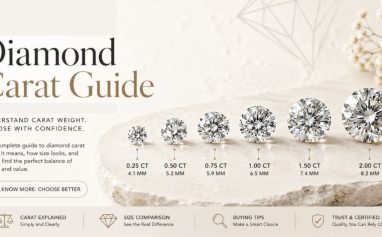
Walk into any jewelry store, and there is one word that gets asked about before anything else. Not cut. Not clarity. Carat.It makes sense. Carat... Continue reading
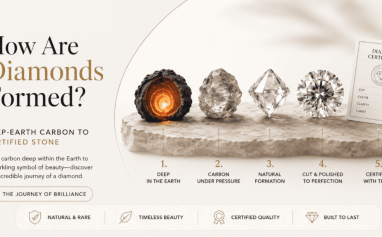
Every natural diamond you have ever seen began as carbon buried between 150 and 700 kilometres beneath your feet, crushed under pressures that would flatten... Continue reading