No products in the cart.

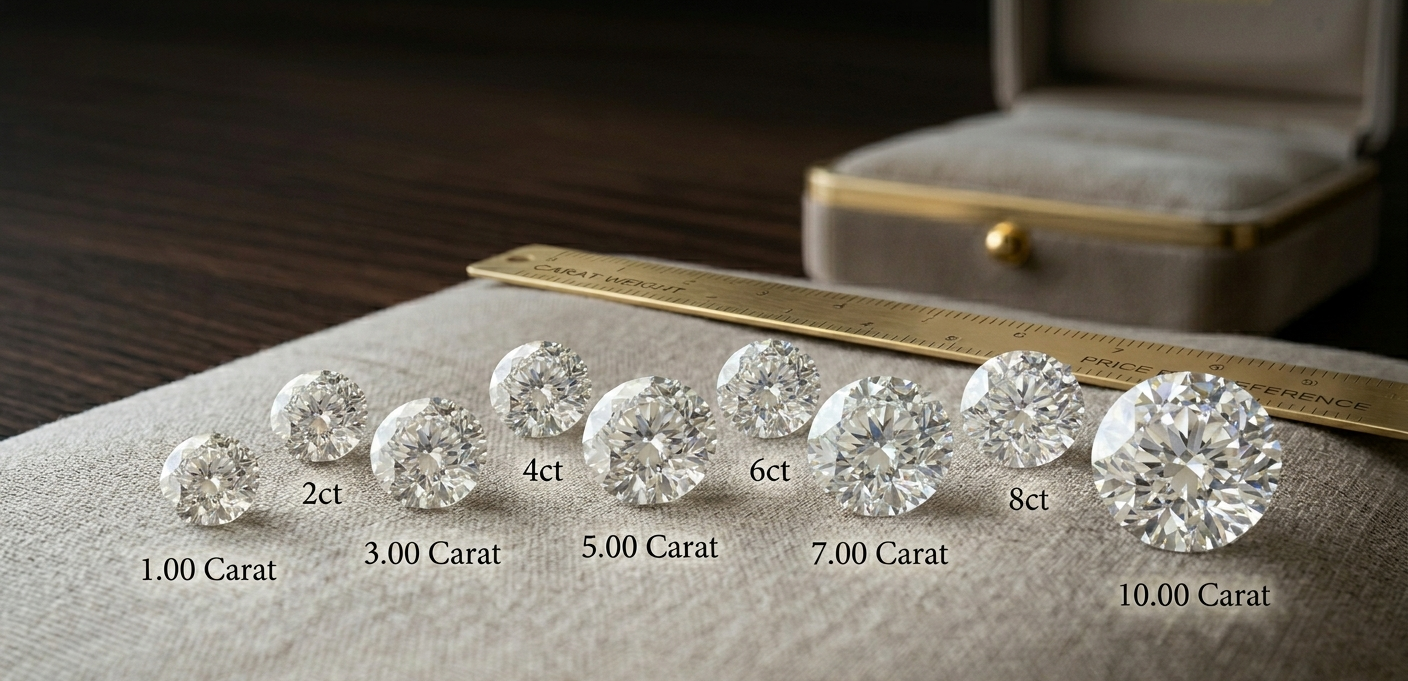
1 to 10 Carat Natural Diamond Price Guide
If you think a 10-carat diamond costs 10 times more than a 1-carat diamond, think again. Diamond pricing does not work in a straight line. As carat size increases, prices rise exponentially — not proportionally. That is why a 10-carat natural diamond can cost 50 to 100 times more than a 1-carat stone of comparable quality.
In this guide, we break down real 2026 market prices for natural diamonds from 1 to 10 carats, by quality tier. We also explain why prices scale the way they do, how to find the best value at each size, and what separates wholesale pricing from retail.
At OM Jewels Inc, we source and supply certified natural diamonds. The prices in this guide are based on 2026 market data from major retailers and wholesale benchmarks.
Natural Diamond Price Chart 2026 — 1 to 10 Carat (USD)
Below is a detailed price guide by carat weight and quality tier for GIA-certified round brilliant natural diamonds with Excellent cut. Fancy shapes (oval, pear, cushion) are typically priced 15–25% below round brilliants at equivalent quality.
At OM Jewels Inc, you can browse our natural diamond collection – certified natural diamonds sourced directly from the New York Diamond District at wholesale pricing.
📅 Price Data Last Verified: June 2026 — This guide is reviewed and updated monthly based on live market data from GIA-certified diamond listings across major wholesale and retail platforms including James Allen, Blue Nile, and Rare Carat.
| Carat | Budget (H-I / SI1) | Good Value (G-H / VS2) | Premium (F-G / VS1) |
| 1.0 ct | $2,800 – $4,000 | $4,000 – $6,000 | $5,500 – $8,500 |
| 1.5 ct | $6,000 – $9,000 | $10,000 – $14,000 | $13,000 – $18,000 |
| 2.0 ct | $14,000 – $18,000 | $18,000 – $28,000 | $25,000 – $40,000 |
| 3.0 ct | $35,000 – $50,000 | $55,000 – $80,000 | $75,000 – $120,000 |
| 4.0 ct | $60,000 – $90,000 | $90,000 – $140,000 | $130,000 – $200,000 |
| 5.0 ct | $80,000 – $120,000 | $100,000 – $150,000 | $150,000 – $250,000 |
| 6–9 ct | $100,000 – $300,000 | $200,000 – $500,000 | $400,000 – $800,000 |
| 10 ct | $200,000 – $500,000 | $400,000 – $800,000 | $800,000 – $2,000,000+ |
Source: 2026 market data — James Allen, Blue Nile, Rare Carat aggregator. Round brilliant, GIA-certified, Excellent cut, no fluorescence.
Natural Diamond Prices by Country — USD, INR, GBP, CAD, AUD (2026)
Diamond prices are quoted globally in US dollars (USD), but buyers in India, the UK, Canada, and Australia naturally want to understand approximate local currency equivalents. The table below shows 2026 approximate pricing for a 1-carat G/VS2 Excellent cut GIA-certified round brilliant across major markets. Note that local retail prices may vary based on import duties, taxes, and dealer margins.
| Country | Currency | 1ct G/VS2 Approx. Price | Notes |
|---|---|---|---|
| USA | USD | $4,000 – $6,000 | Base market, no import duty |
| India | INR | ₹3,50,000 – ₹5,50,000 | Import duty + GST applicable |
| UK | GBP | £3,200 – £4,800 | VAT may apply at retail |
| Canada | CAD | $5,500 – $8,000 | Varies by province tax |
| Australia | AUD | $6,200 – $9,000 | GST applicable at retail |
| Japan | JPY | ¥600,000 – ¥900,000 | Consumption tax applicable |
Note: Exchange rates fluctuate. Prices above are approximate and based on mid-2026 USD conversion rates. Always verify current rates before purchasing.
Why Diamond Prices Increase Exponentially
Large, gem-quality natural diamonds are among the rarest objects on Earth. To understand why a 2-carat diamond costs 4 to 5 times more than a 1-carat – not just 2 times more – you need to understand the rarity curve.
Consider this: to mine one carat of gem-quality rough diamond requires moving approximately 250 tonnes of earth. As the size increases, the probability of finding a diamond in that rough drops dramatically. A 5-carat diamond of investment-grade quality represents fewer than 0.01% of all gem-quality rough mined globally in any given year.
This is why the per-carat price itself increases with size – you are not just paying for more diamond, you are paying for exponentially scarcer diamond. A 1-carat G/VS2 excellent-cut stone might cost $5,000/ct. The same quality at 3 carats might cost $20,000–$27,000/ct. You pay a premium on every single carat because stones of that size are that rare.
1 Carat Natural Diamond Price 2026
The 1-carat natural diamond is the most actively traded segment of the diamond market. It is the standard benchmark for engagement rings and the most frequently searched size. Prices in 2026 for a 1-carat round brilliant, GIA-certified, Excellent cut:
| Quality | Color | Clarity | Price Range (USD) |
| Budget | H – I | SI1 – SI2 | $2,800 – $4,000 |
| Good Value | G – H | VS2 | $4,000 – $6,000 |
| Premium | F – G | VS1 | $5,500 – $8,500 |
| Investment | D – E | VVS1 – VVS2 | $9,000 – $16,000+ |
Insider tip: Consider a 0.90-carat stone instead of a 1.00-carat. The diameter difference is less than 0.2mm – completely invisible to the naked eye. But the price difference is typically 15–20% because the market places a strong premium on the 1.00-carat psychological milestone weight.
To understand exactly how each quality grade moves price, read our guide on how Cut, Color, Clarity, and Carat affect diamond price.
1.5 Carat Natural Diamond Price 2026
The 1.5-carat natural diamond sits in a unique position in the market. It offers significantly more visual presence than a 1-carat stone while remaining more accessible than a 2-carat diamond. In 2026, a 1.5-carat round brilliant, GIA-certified, Excellent cut is priced as follows:
| Quality | Color | Clarity | Price Range (USD) |
|---|---|---|---|
| Budget | H – I | SI1 – SI2 | $6,000 – $9,000 |
| Good Value | G – H | VS2 | $10,000 – $14,000 |
| Premium | F – G | VS1 | $13,000 – $18,000 |
| Investment | D – E | VVS1 – VVS2 | $20,000 – $35,000+ |
2 Carat Natural Diamond Price 2026
The 2-carat natural diamond has become the aspirational standard for premium engagement rings. A 2-carat stone at identical quality does not cost twice as much as a 1-carat – it costs 4 to 5 times more, because finding a 2-carat rough that yields a high-quality 2-carat polished stone is exponentially rarer.
| Quality | Color | Clarity | Price Range (USD) |
| Budget | H – I | SI1 | $14,000 – $18,000 |
| Good Value | G – H | VS2 | $18,000 – $28,000 |
| Premium | F – G | VS1 | $25,000 – $40,000 |
| Investment | D – E | VVS1 – VVS2 | $40,000 – $80,000+ |
Value tip: A 1.8-carat or 1.9-carat stone looks identical to a 2-carat on the finger. Price savings of 10–20% are typical at these just-under weights because the market premium on 2.00ct is significant.
3, 4, and 5 Carat Natural Diamond Prices 2026
Diamonds above 2 carats enter investment-grade territory. Stones of this size with good quality grades are genuinely scarce, and pricing reflects that rarity. For context: a 3-carat H/VS2 round brilliant at $55,000–$80,000 may cost roughly 10–15 times more per carat than a comparable 1-carat stone.
| Carat | Good Value (H-G / VS2) | Premium (F-G / VS1) | Investment (D-E / VVS) |
| 3.0 ct | $55,000 – $80,000 | $75,000 – $120,000 | $120,000 – $200,000+ |
| 4.0 ct | $90,000 – $140,000 | $130,000 – $200,000 | $200,000 – $350,000+ |
| 5.0 ct | $100,000 – $150,000 | $150,000 – $250,000 | $250,000 – $500,000+ |
At 5 carats and above, natural diamond pricing becomes increasingly bespoke. Two stones with the same paper grades can vary significantly in price based on inclusion placement, fluorescence, and overall visual performance. Buying at this level should always involve seeing the stone in person or via high-resolution video.
Most Loved Pear Shape Diamond Guide
Natural vs Lab-Grown Diamond Price Comparison 2026
Lab-grown diamonds have the same chemical structure and hardness as natural diamonds. The difference is in origin and price. In 2026, lab-grown diamond prices have stabilised after a 70%+ decline since 2020 and are now at or near a price floor.
| Carat | Natural Diamond (G/VS2) | Lab-Grown (G/VS2) | Saving with Lab-Grown |
| 1.0 ct | $4,000 – $6,000 | $800 – $1,500 | ~75% saving |
| 2.0 ct | $18,000 – $28,000 | $2,500 – $4,500 | ~85% saving |
| 3.0 ct | $55,000 – $80,000 | $5,000 – $9,000 | ~90% saving |
The case for natural diamonds: better long-term resale value, geological rarity, established certification infrastructure, and a market that still values natural origin for investment and heirloom purposes. The case for lab-grown: dramatically larger or higher-quality stone for the same budget.
OM Jewels Inc supplies both natural and lab-grown certified diamonds. Contact us to compare options for your specific requirements.
Contact us for wholesale diamond pricing and to compare options for your specific requirements.
For exact lab-grown pricing at each quality tier, our 1 carat lab-grown diamond price guide has full 2026 data.
Diamond Magic Sizes — Save 15 to 25 Percent
One of the most practical money-saving strategies in diamond buying is purchasing at just-under milestone weights. Diamond prices spike sharply at round-number milestones (1.00ct, 1.50ct, 2.00ct, etc.) because of psychological demand. A stone at 0.95ct looks identical to a 1.00ct stone on the finger, but avoids the milestone premium.
| Instead of | Buy this | Diameter difference | Typical saving |
| 1.00 carat | 0.90 – 0.95 carat | < 0.2mm (invisible) | 15 – 20% |
| 1.50 carat | 1.40 – 1.45 carat | < 0.2mm (invisible) | 10 – 15% |
| 2.00 carat | 1.80 – 1.90 carat | < 0.3mm (invisible) | 12 – 20% |
| 3.00 carat | 2.80 – 2.90 carat | < 0.3mm (invisible) | 10 – 18% |
This strategy is widely used by experienced buyers and professional jewelers. At OM Jewels Inc, we specifically maintain inventory at these just-under weights to offer clients maximum value. Find unique shape diamond layouts at OM Jewels Inc
What Affects Diamond Price Beyond the 4Cs
Most buyers know about Cut, Color, Clarity, and Carat. But as a wholesale diamond dealer, we know there are additional factors that move price significantly — and most sellers do not explain them upfront.
Rapaport Pricing
The Rapaport Diamond Report is the global wholesale benchmark for diamond pricing. It sets a base price list for every quality combination. Diamonds are traded at a percentage above or below ‘Rap’. When a seller says a stone is ‘15% off Rap’, they mean 15% below the Rapaport benchmark for that quality. Understanding this system helps buyers verify whether a price is fair.
Fluorescence
Strong blue fluorescence in D–F color diamonds typically reduces price by 10–20% because it can cause a milky or hazy appearance under certain lighting conditions. In G–H color stones, faint to medium fluorescence is neutral or slightly positive, as it can make the stone appear whiter.
GIA vs IGI Premium
GIA-certified diamonds consistently command a 10–20% premium over IGI-certified stones of identical stated grades. This is because the market perceives GIA grading as more conservative and consistent. For natural diamonds, GIA certification is the standard for investment-grade purchases.
Shape Premium
Round brilliant diamonds carry the highest price premium of any shape – typically 20–35% more per carat than oval, cushion, pear, or radiant cuts of equivalent quality. This is because round brilliants require the most rough diamond to be cut away during manufacturing. If visual size and quality matter more than shape, fancy cuts offer significant value.
For a detailed per-carat breakdown across all quality grades, see our natural diamond price per carat guide.
Diamond Price Trends 2024–2026
Natural diamond prices experienced significant softness between 2022 and 2024, driven primarily by the rapid growth of the lab-grown diamond market. Mid-tier commercial goods (1–2 carats) saw pricing pressure as consumers increasingly compared natural and lab-grown options side by side.
However, the market has stabilised in 2025–2026 for most segments. Key trends:
- 1–2 carat natural diamonds: Stable to modest recovery after 2022–2024 softness. Lab-grown competition has found equilibrium.
- 3 carat and above: Continued price firmness. Investment-grade natural diamonds of this size have not experienced the same pricing pressure as smaller sizes.
- Lab-grown diamonds: Prices declined 70%+ since 2020 and appear to have reached a floor in 2025–2026. Further significant drops are not expected as production costs stabilise.
- Fancy shapes: Oval and pear cut diamond have continued gaining market share and slight pricing premiums relative to historic discounts to round brilliant.
How to Get the Best Value on a Natural Diamond
1. Prioritise Cut Above Everything
Cut is the single most important quality factor in how beautiful a diamond looks. An Excellent-cut G/VS2 stone will consistently outperform a Good-cut D/VVS2 stone visually – and cost significantly less. Never compromise on the cut grade.
2. Buy G or H Color
D through F color diamonds look identical to G–H when mounted in a setting and viewed by the naked eye. The price premium for D–F over G–H at the same clarity and cut is typically 30–50%. G or H is where sophisticated buyers shop.
3. Target VS1 or VS2 Clarity
VS1 and VS2 diamonds are completely eye-clean – no inclusions visible without magnification. The difference in appearance between VS1 and VVS1 is zero to the naked eye, but the price difference is typically 20–35%. SI1 can also be eye-clean but requires individual inspection.
4. Consider Fancy Shapes
Oval, cushion, and pear cuts appear 10–20% larger than a round diamond of the same carat weight due to their elongated face-up surface area. They cost 15–25% less than round brilliant. This combination gives you more perceived size and better value per dollar spent.
5. Buy Certified — GIA or AGS
Never purchase a natural diamond without GIA or AGS certification for significant purchases. Uncertified diamonds are impossible to price accurately, harder to insure, and much harder to resell.
View our fancy shape natural diamonds to see ovals, cushions, and pears with current pricing.
6. Compare Wholesale vs Retail
The same certified stone can vary by 20–40% between a retail jeweler (with showroom overhead built in) and a wholesale source. At OM Jewels Inc, we serve trade buyers directly from the Diamond District, which means better pricing for jewelers and designers who know where to source.
Before making any final purchase decision, work through our complete diamond buying checklist – it covers certification verification, price comparison, resale policy, and the 10 things every buyer should check.
FAQs
How much does a 1-carat natural diamond cost in 2026?
1-carat natural diamond with good value quality (G color, VS2 clarity, Excellent cut, GIA certified) typically costs between $4,000 and $6,000 in 2026. Budget quality (H-I/SI1) starts from $2,800. Premium quality (F-G/VS1) ranges from $5,500 to $8,500. Investment-grade D/VVS stones can reach $16,000+.
How much does a 2-carat natural diamond cost?
A 2-carat natural diamond at good value quality (G-H/VS2/Excellent cut) costs approximately $18,000 to $28,000 in 2026. The reason it costs 4–5x more than a 1-carat, not just 2x, is exponential rarity. Finding a 2-carat rough that yields a quality polished stone is significantly rarer than finding a 1-carat equivalent.
How much does a 5-carat natural diamond cost?
A 5-carat natural diamond at H/VS2/Excellent cut typically costs $100,000–$150,000 in 2026. Investment-grade D Flawless 5-carat stones exceed $250,000. Five-carat natural diamonds of quality grades represent fewer than 0.01% of all gem-quality rough mined globally.
Why do diamond prices increase exponentially with carat weight?
Because large gem-quality natural diamonds are exponentially rarer than small ones. To find one carat of rough diamond, approximately 250 tonnes of earth must be mined. As the desired carat size increases, the probability of finding a diamond in that rough at the target quality drops sharply. Supply decreases steeply while demand stays constant, which drives prices up at an accelerating rate.
How much cheaper are lab-grown diamonds vs natural in 2026?
Lab-grown diamonds are approximately 75–85% cheaper than natural diamonds of comparable quality at the 1-carat level. At 2 carats, the saving is approximately 85%. At 3 carats, approximately 90%. In 2026, a 1-carat G/VS2 lab-grown round brilliant retails for approximately $800–$1,500 compared to $4,000–$6,000 for natural.
Which carat size is the best value for an engagement ring?
A 0.90 to 1.00-carat stone offers the best combination of presence and value for most buyers. Consider buying at 0.90 carats to save 15–20% over 1.00 carats with no visible size difference. If budget allows more, the 1.8-carat range offers excellent visual impact at a meaningful discount versus the 2.00-carat milestone weight premium.
What is the Rapaport diamond price?
The Rapaport Diamond Report is the international wholesale benchmark for diamond pricing. Published weekly, it sets a base price per carat for every combination of color, clarity, and carat weight. Diamonds are traded in the wholesale market at a percentage above or below this list. Understanding Rapaport pricing helps buyers assess whether a retail price represents fair value.
Should I buy a certified natural diamond?
Yes, always for any significant purchase. GIA certification provides an independent, scientific evaluation of Cut, Color, Clarity, and Carat from the world’s most trusted gemological laboratory. It protects your investment, enables accurate insurance valuation, and provides a verified basis for future resale. Never buy a natural diamond above $1,000 without GIA certification.
Related posts
Introduction If you have ever compared the price of the same diamond at a retail jewelry store and a wholesale supplier, you already know the... Continue reading
Two diamonds can share the same carat weight, the same color grade, and the same clarity – yet look completely different on the finger. One... Continue reading
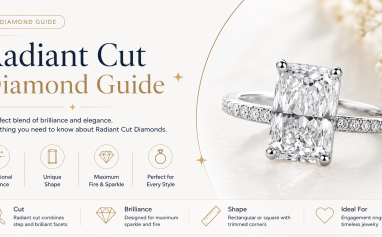
Radiant Cut Diamond Guide for Beginners: Everything You Need to Know in 2026 If you love the fiery sparkle of a round brilliant but prefer... Continue reading
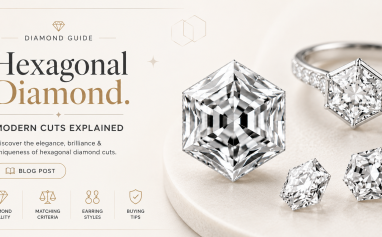
If the round brilliant is the classic little black dress of diamonds, the Hexagonal Diamond is the architectural statement piece – six equal sides, razor-clean... Continue reading
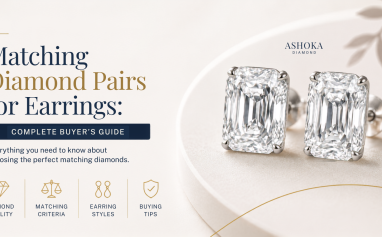
A pair of diamond earrings looks effortless when it is done right – two stones that face up identically, sparkle in unison, and sit perfectly... Continue reading