No products in the cart.

Diamond Ratio Explained: Ideal Length-to-Width for Every Shape
Two diamonds can share the same carat weight, the same color grade, and the same clarity – yet look completely different on the finger. One appears long, sleek, and elegant; the other looks short, chunky, and awkward. The reason is a single number that most first-time buyers overlook: the length-to-width ratio.
Whether you’re a retail jeweler sourcing inventory, a designer building a custom piece, or a couple shopping for the perfect engagement ring, understanding the diamond ratio is the fastest way to predict exactly how a stone will look before you ever see it in person. In this complete 2026 guide, the diamond experts at OM Jewels Inc break down the ideal length-to-width ratio for every popular diamond shape, explain how to calculate it, and share the current market trends shaping buyer preferences today.
What Is the Diamond Length-to-Width Ratio?
The length-to-width ratio (often written as L/W ratio) is a simple numerical value that describes the outline of a diamond when viewed from above – the “face-up” view. It tells you how elongated or how square a stone appears relative to its width.
A ratio of 1.00 means the length and width are identical – the diamond appears perfectly square (or perfectly round, in the case of round brilliants). As the ratio climbs above 1.00, the diamond becomes progressively more elongated. A 1.30 ratio looks gently stretched; a 2.00 ratio looks dramatically long and slender.
This measurement matters most for fancy shape diamonds – any shape other than round. Ovals, emeralds, pears, marquises, radiants, cushions, and princess cuts can all be cut to a wide range of outlines, and the L/W ratio is the industry-standard way to describe that outline with precision.
Here’s something important that many buyers don’t realize: while GIA assigns an official cut grade to round brilliant diamonds, fancy shapes do not receive an overall cut grade on GIA reports. GIA has acknowledged that there is no internationally accepted system for evaluating fancy-cut appearance yet. That means judging proportions falls on you, and the L/W ratio is your single most useful tool for the job.
How to Calculate the Diamond Ratio
The formula couldn’t be simpler:
Length ÷ Width = Length-to-Width Ratio
Both measurements are taken in millimeters and appear on every GIA or IGI grading report, listed as length × width × depth for fancy shapes (and minimum diameter × maximum diameter × depth for rounds).
Worked examples:
| Length | Width | Calculation | L/W Ratio | Appearance |
| 5.50 mm | 5.45 mm | 5.50 ÷ 5.45 | 1.01 | Square/round outline |
| 9.10 mm | 7.00 mm | 9.10 ÷ 7.00 | 1.30 | Softly elongated |
| 10.00 mm | 7.00 mm | 10.00 ÷ 7.00 | 1.43 | Classic elongated |
| 12.00 mm | 6.00 mm | 12.00 ÷ 6.00 | 2.00 | Dramatically long |
The width side of the ratio is always expressed as 1, so a stone measuring 10 mm long and 7 mm wide is described as having a 1.43:1 ratio.
Pro tip: If the ratio isn’t printed directly on your certificate, don’t worry – the length and width always are. Grab a calculator, divide, and you’ll know the outline of the diamond before it ever arrives.
Why the L/W Ratio Matters So Much
1. It defines how the diamond looks on the hand
An elongated stone (higher ratio) visually lengthens the finger and covers more of it, which is why elongated ovals, emeralds, and marquises are so flattering. A squarer stone (ratio near 1.00) reads as classic, symmetrical, and compact.
Radiant Cut Diamond Ultimate Guide
2. It affects brilliance and light performance
Ratios that stray too far outside a shape’s ideal range can compromise sparkle. Stretch an oval or pear too long, and the dreaded bow-tie effect – a dark shadow band across the center of the stone – becomes far more pronounced. Cut it too squat, and the shape loses its identity entirely.
3. It influences perceived size
Elongated shapes distribute their carat weight horizontally rather than vertically, so they appear larger. A well-proportioned elongated oval can appear 10% or more larger than a round diamond of identical carat weight – one of the biggest value hacks in diamond buying.
4. It impacts price
Well-proportioned stones within the ideal ratio range command stronger prices and resale value. Diamonds cut outside the sweet spot – often to preserve carat weight from the rough – typically trade at a discount because the outline is less desirable.
VS Diamond Quality Complete 2026 Guide
Ideal Diamond Ratio Chart for Every Shape
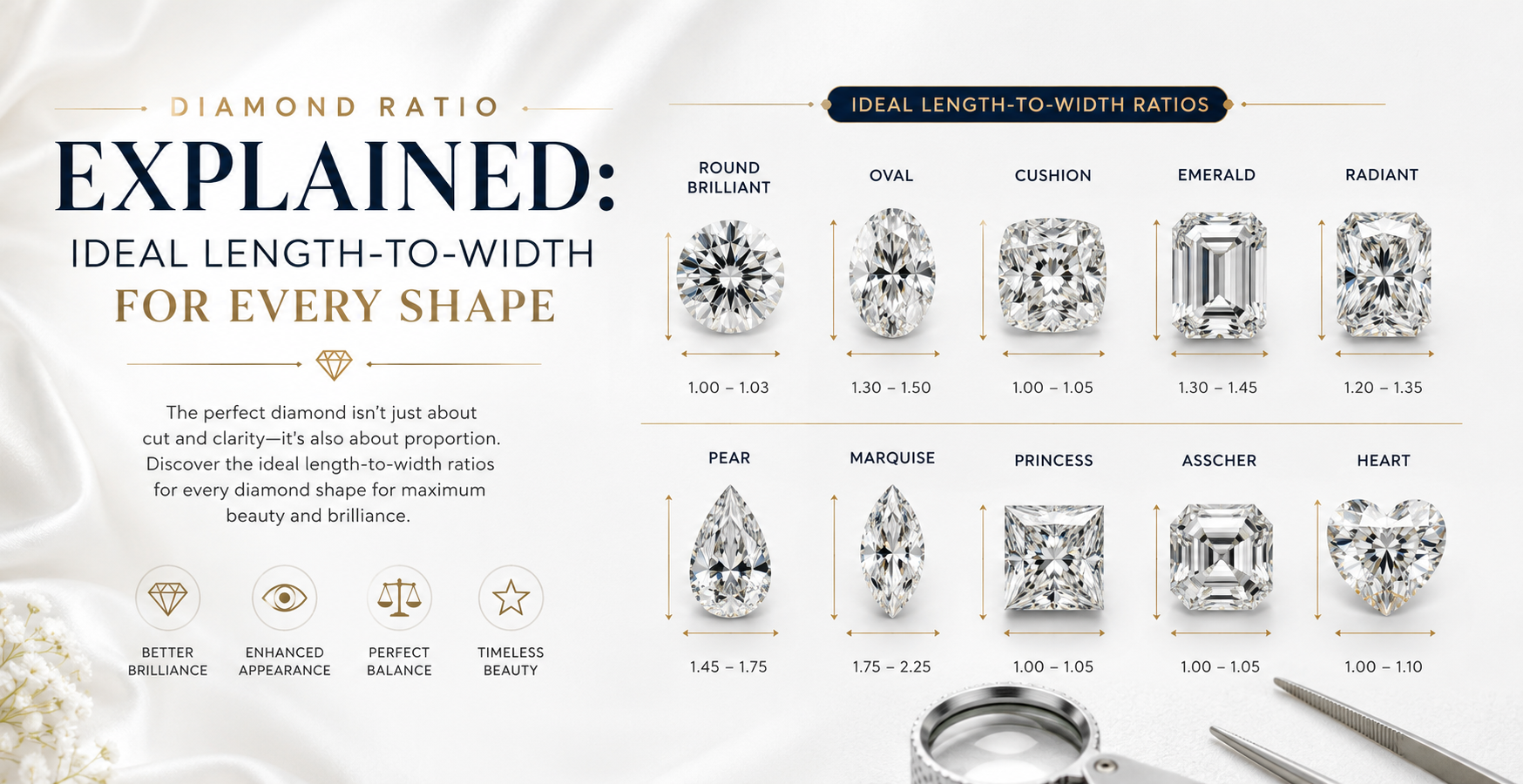
Use this master chart as your quick reference. “Ideal range” reflects the proportions most preferred by the market in 2026; “sweet spot” is the single most requested ratio at OM Jewels Inc.
| Diamond Shape | Ideal L/W Ratio Range | Sweet Spot | Look Achieved |
| Round | 1.00 – 1.03 | 1.00 | Perfectly circular, maximum brilliance |
| Princess | 1.00 – 1.05 | 1.00 | Crisp, modern square |
| Cushion (square) | 1.00 – 1.10 | 1.05 | Soft, pillow-like square |
| Cushion (elongated) | 1.15 – 1.30 | 1.20 | Trendy stretched cushion |
| Asscher | 1.00 – 1.05 | 1.00 | Vintage step-cut square |
| Emerald | 1.30 – 1.60 | 1.40 | Sophisticated rectangle |
| Oval | 1.30 – 1.50 | 1.40 | Balanced, flattering elongation |
| Radiant | 1.00–1.35 (square) / 1.30–1.50 (rect.) | 1.35 | Brilliant-faceted rectangle |
| Pear | 1.40 – 1.75 | 1.55 | Graceful teardrop |
| Marquise | 1.75 – 2.25 | 1.95 | Dramatic elongated eye shape |
| Heart | 0.95 – 1.05 | 1.00 | Balanced, romantic symmetry |
Shape-by-Shape Breakdown of Ideal Ratios
Round Brilliant – Ideal Ratio: 1.00 to 1.03
The round brilliant is the only shape where the ratio should barely be a conversation. A well-cut round measures nearly identical across every diameter. Anything above 1.03 suggests the stone is visibly out-of-round – a symmetry flaw worth avoiding. With 57–58 facets engineered for maximum light return, the round remains the world’s most brilliant cut, and its ratio should always sit as close to 1.00 as possible.
E vs F vs G Color Diamond – Price Quality Guide
Oval – Ideal Ratio: 1.30 to 1.50
The oval has been the reigning fancy-shape champion for engagement rings for several years running, and its ratio range is the most hotly debated. A 1.30 ratio delivers a softer, plumper oval; 1.50 creates a longer, more slender silhouette. Push beyond 1.50, and the bow-tie shadow intensifies while the shape starts looking stretched. Ovals in the 1.40–1.50 band offer the best combination of finger coverage, brilliance, and availability.
Emerald – Ideal Ratio: 1.30 to 1.60
The emerald cut’s elegant step facets demand disciplined proportions. The classic rectangle sits between 1.30 and 1.45 – balanced and widely available. Buyers who love a longer, Art Deco look hunt for 1.50–1.60 ratios. Drop below 1.30 and an emerald begins to resemble an off-square Asscher rather than an intentional rectangle.
Pear – Ideal Ratio: 1.40 to 1.75
The teardrop shape works across an unusually wide range. Around 1.50, the pear looks balanced and classic; approaching 1.70–1.75, it becomes long, dramatic, and finger-flattering. Watch the shoulders and wings for symmetry, and check that the point aligns perfectly with the rounded end – asymmetry is more visible in pears than almost any other shape.
Pear Shaped Diamond Ultimate 2026 Guide
Marquise – Ideal Ratio: 1.75 to 2.25
The most naturally elongated shape of all, the marquise delivers the largest face-up spread per carat in the industry. Ratios near 1.75 produce a fuller, softer outline; ratios approaching 2.15–2.25 create a strikingly sharp, elongated eye shape. Because the marquise tapers to two points, symmetry between the two halves is critical.
Marquise Diamond: Everything You Need To Know
Radiant – Ideal Ratio: 1.00 to 1.50
Radiants come in two personalities. Square radiants (1.00–1.05) offer a brilliant-faceted alternative to the princess cut with safer clipped corners. Rectangular radiants in the 1.30–1.50 range have surged in popularity, delivering emerald-cut elegance with brilliant-cut fire.
Cushion – Ideal Ratio: 1.00 to 1.30
The traditional cushion is a soft square between 1.00 and 1.10. But the story of the last few years is the elongated cushion (1.15–1.30) – one of the fastest-growing shapes in the market, blending vintage romance with a modern, lengthened profile.
Princess – Ideal Ratio: 1.00 to 1.05
The princess cut is prized precisely for its crisp square geometry, so the tighter the ratio to 1.00, the better. To the naked eye, anything up to 1.05 still reads as square. Ratios above that begin to look unintentionally rectangular – although in a three-stone setting with side stones, a slight stretch (up to ~1.08) is far less noticeable.
Asscher – Ideal Ratio: 1.00 to 1.05
Often called the square emerald cut, the Asscher’s hypnotic windmill pattern of step facets depends on true squareness. Stay within 1.00–1.05 for the authentic vintage look this 1902 classic is famous for.
Heart – Ideal Ratio: 0.95 to 1.05
The heart is the only shape that can dip below 1.00, thanks to its unique silhouette. Wider hearts (~0.95) look full and romantic; narrower hearts (~1.05) appear more elongated. A balanced 1.00 ratio, with symmetrical lobes and a well-defined cleft, remains the gold standard.
2026 Diamond Ratio Trends: What Buyers Want Now
The market has spoken clearly over the past two years, and the message is: longer is stronger.
- Elongated everything. Elongated cushions, elongated radiants, and 1.45+ ovals are dominating engagement ring searches. This echoes long-standing GIA research: in a well-known GIA consumer study on fancy-shape outlines, both consumers and trade professionals preferred ratios more elongated than what the market was producing, with preferences peaking around 1.70. The market has finally caught up.
- Lab-grown fuels bolder proportions. With lab-grown diamonds offering dramatically more carat for the budget, buyers are experimenting with longer, larger fancy shapes they previously couldn’t afford – driving demand for elongated ovals, emeralds, and marquises in the lab-grown category.
- The marquise comeback. After decades in the shadows, the marquise is enjoying a genuine revival in 2026, prized for its unmatched spread and vintage-modern crossover appeal.
- East-west settings. Elongated stones set horizontally across the finger are trending strongly, giving classic ratios a fresh, contemporary presentation.
- Fancy shapes beyond bridal. Kite, hexagon, and lozenge cuts – specialties at OM Jewels Inc – are increasingly used in fashion jewelry, where unconventional ratios are a feature, not a flaw.
How Ratio Affects Price and Perceived Size
Understanding ratio isn’t just about aesthetics – it’s about value engineering your purchase.
| Factor | Lower Ratio (near 1.00) | Higher Ratio (elongated) |
| Face-up spread | Smaller appearance per carat | Larger appearance per carat |
| Finger coverage | Compact footprint | Longer, more coverage |
| Bow-tie risk (oval/pear/marquise) | Minimal | Increases past the ideal range |
| Availability | Common | Harder to cut from rough; scarcer at high ratios |
| Price behavior | Standard pricing | Premium within ideal range; discount outside it |
The key insight: because elongated stones carry their weight horizontally, a shallower, well-ratioed elongated diamond will look significantly bigger than a deep, squat stone of identical carat weight. When comparing two stones, always compare millimeter measurements, not just carats – carats are what you pay for, but millimeters are what you see.
Common Mistakes to Avoid When Choosing a Ratio
- Buying on carat weight alone. Two 1.50-carat ovals with ratios of 1.28 and 1.48 are entirely different stones. Always check the ratio.
- Chasing extreme elongation. Past the ideal range, brilliance suffers, bow-ties darken, and durability at thin points can decline.
- Ignoring the setting. Solitaires showcase the ratio prominently; halo and three-stone settings can visually soften a slightly off-ideal ratio.
- Trusting photos over measurements. Online images are often stretched or compressed. The certificate’s millimeter measurements never lie.
- Forgetting personal preference. Ideal ranges are market consensus, not law. If you love a 1.60 emerald or a plump 1.35 pear, that preference is valid – just buy it knowingly, and buy it well-cut.
Frequently Asked Questions
What is the best length-to-width ratio for a diamond?
There’s no single best number – it depends entirely on the shape. Rounds should be 1.00–1.03, ovals 1.30–1.50, emeralds 1.30–1.60, pears 1.40–1.75, and marquises 1.75–2.25. Within each range, personal taste decides.
Is the ratio printed on my GIA certificate?
Usually not directly, but the length and width in millimeters always are. Divide length by width to get the ratio in seconds.
Does a higher ratio make a diamond look bigger?
Yes. Elongated stones spread their carat weight across the finger, creating a larger face-up appearance than square or round stones of equal weight.
Do lab-grown diamonds follow the same ratio guidelines?
Absolutely. The ideal L/W ranges are identical for natural and lab-grown diamonds – light behaves the same way in both.
Can OM Jewels Inc source a specific ratio for me?
Yes. Custom diamond manufacturing is one of our core specialties. Share your target shape, ratio, and calibrated size, and our master craftsmen will cut to your exact specifications.
About OM Jewels Inc
OM Jewels Inc is a premier diamond manufacturer, wholesaler, and exporter headquartered in the heart of New York City’s Diamond District. Established in 2018 as a first-generation diamond import company, the company began by importing diamonds from India and has since grown into a globally trusted supplier serving jewelers, designers, and retailers across the United States, Canada, the United Kingdom, the European Union, Hong Kong, the UAE, Australia, Singapore, and Japan.
Every diamond in our inventory is fully certified by GIA or IGI, with laser-inscribed identification numbers for permanent, verifiable authenticity – and offered at direct factory pricing with complete transparency.
Our Product Range Includes:
- Natural and lab-grown loose polished diamonds
- Fancy shape diamonds – hexagonal, kite, marquise, pear, oval, and lozenge cuts
- Diamond matching pairs and calibrated layout sets
- Salt & pepper diamonds and black diamonds
- Custom diamond manufacturing cut to your exact ratio, shape, and size specifications
- Bulk wholesale diamond supply with flexible minimum order quantities
With a streamlined global supply chain, secure insured shipping, and consistent inventory availability, OM Jewels Inc is the sourcing partner of choice for jewelry professionals who demand precision proportions – including the perfect length-to-width ratio, every single time.
| 📍 Contact OM Jewels Inc Have questions about diamond ratios or need help sourcing the perfect stone? Our experts are here to help. | |
| Address | 20 W 47th St, Suite 405, New York, NY 10036, USA |
| Phone | +1 201 680 1878 / +1 917 639 3354 |
| +1 917 639 3354 | |
| info@omjewelsinc.com | |
| Website | www.omjewelsinc.com |
| @omjewelsinc | |
| linkedin.com/company/om-jewels-inc | |
| Wholesale | Log in at omjewelsinc.com to browse live inventory and unlock exclusive wholesale pricing |
Final Thoughts
The length-to-width ratio is the quiet hero of diamond buying – a single number that predicts finger coverage, brilliance, perceived size, and long-term value before you ever see the stone in person. Learn the ideal range for your favorite shape, verify the millimeter measurements on the certificate, and let your personal taste guide the final call within that range.
And when you’re ready to source diamonds with perfect proportions – whether a classic 1.40 oval, a dramatic 2.10 marquise, or a fully custom cut made to your exact specification – OM Jewels Inc delivers certified quality, transparent pricing, and true manufacturing expertise from the center of New York’s Diamond District.
Related posts
Introduction If you have ever compared the price of the same diamond at a retail jewelry store and a wholesale supplier, you already know the... Continue reading
Radiant Cut Diamond Guide for Beginners: Everything You Need to Know in 2026 If you love the fiery sparkle of a round brilliant but prefer... Continue reading
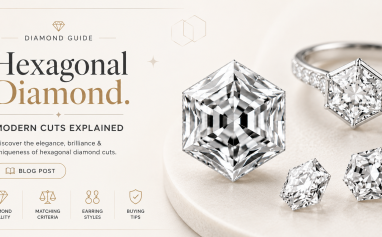
If the round brilliant is the classic little black dress of diamonds, the Hexagonal Diamond is the architectural statement piece – six equal sides, razor-clean... Continue reading
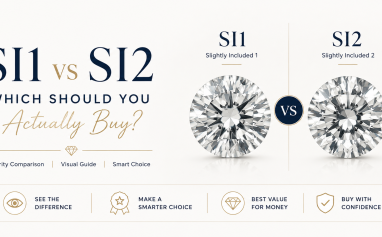
What Do SI1 and SI2 Actually Mean? On the GIA clarity scale, “SI” stands for Slightly Included – the fifth tier down from Flawless, sitting... Continue reading
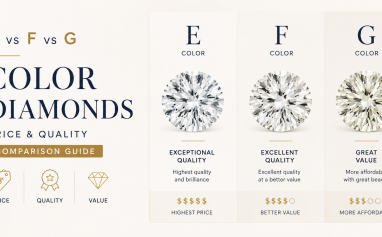
Choosing a diamond color grade is one of the most consequential – and most confusing – decisions a buyer makes. The difference between an E,... Continue reading