No products in the cart.

Checklist Before Buying Any Diamond – Save This
Buying a diamond is one of the largest purchases most people make in their lifetime. In the United States alone, the average diamond engagement ring costs between $5,000 and $7,500 – and that number rises significantly for larger or higher-quality stones.
Yet most buyers walk into a jewelry store — or open an online listing – with almost no framework for evaluating what they are looking at. Sellers know this. And some take advantage of it.
This guide is different. It was written by the diamond specialists at OM Jewels Inc, natural diamond dealers operating from New York’s Diamond District at 20 W 47th Street. We sell to jewelers, designers, and retailers globally. We know exactly how diamonds are priced at the source – and where the markup happens.
Below is our complete diamond buying checklist for 2026. Use it before you spend a single dollar.
Before making your final purchase, it’s also important to understand the natural vs lab-grown diamonds to make a confident decision.
1. Always Verify the Certification – Non-Negotiable
A diamond certificate is not a receipt. It is an independent, scientific evaluation of the stone’s quality performed by a gemological laboratory. Never buy a diamond without one.
The most trusted laboratories in the world are:
- GIA (Gemological Institute of America): The global gold standard. GIA grading is the most consistent and conservative. If you can only choose one lab, choose GIA.
- AGS (American Gem Society): Highly respected, especially for its cut grading system. AGS uses a 0–10 scale where 0 is ideal.
- IGI (International Gemological Institute): Widely accepted and commonly used for lab-grown diamonds. Generally grades slightly more generously than GIA.
- HRD (Hoge Raad voor Diamant): A European standard lab, common in diamond sourced through Antwerp and international suppliers.
Certificates to approach with caution: EGL (European Gemological Laboratory) certificates vary significantly in grading consistency between branches. An EGL SI1 is not equivalent to a GIA SI1 – it may grade 1–2 clarity grades higher. This means a stone sold as SI1 under EGL might actually be I1 under GIA grading.
Looking for premium quality stones? Browse our certified diamonds collection for more options.
How to Verify a GIA Certificate in 30 Seconds
- Go to GIA Report Check (the official GIA report check tool)
- Enter the report number printed on the certificate
- The database will return the full report – confirm all 4Cs match the certificate you were given
- Ask to see the diamond’s girdle inscription under a loupe or jeweler’s microscope – the GIA report number is laser-inscribed there
- If the inscription does not match the certificate number, do not buy
For IGI certificates, use IGI Report Check. For AGS, use check.agslab.com. Always verify before you pay.
How to Verify Diamond Certification? Easy Tutorial
2. Understand the 4Cs – But Prioritise Smartly
The 4Cs — Cut, Color, Clarity, and Carat — are the universal framework for evaluating a diamond. But most buyers spend their budget in the wrong order. Here is the right priority:
Cut – Never Compromise Here
Cut is the single most important factor in how beautiful your diamond looks. A well-cut diamond captures and reflects light brilliantly. A poorly cut diamond looks dull regardless of its color or clarity grade.
Cut grades (GIA scale): Excellent → Very Good → Good → Fair → Poor
Always buy an excellent or Ideal cut for maximum brilliance. A G-color diamond with an Excellent cut will look more beautiful than a D-color diamond with a Good cut — and cost significantly less.
Color – The Smart Range Is G–H
The GIA color scale runs from D (completely colorless) to Z (visible yellow tint). Here is the practical breakdown for value buyers.
| Color Grade | Description | Recommendation |
| D – F | Colorless – no tint visible even under magnification | Premium price, minimal visible difference. Buy only if budget is not a concern. |
| G – H | Near colorless – appears white to the naked eye when set | Best value range. Looks identical to D-F when mounted in white gold or platinum. |
| I – J | Very slight warmth – visible to a trained eye when loose | Good value. Can work well in yellow gold or rose gold settings where warm metal masks the tint. |
| K – Z | Visible yellow or brown tint | Avoid for engagement rings unless intentionally seeking a warm or fancy-yellow appearance. |
Insider tip from OM Jewels Inc: In our wholesale experience, the price difference between a G and a D of the same quality can be 30–50%. The visual difference when the stone is set in a ring is essentially zero to the naked eye. G–H is where sophisticated buyers shop.
Clarity — Eye-Clean Is All You Need
Clarity measures the internal and surface flaws (called inclusions and blemishes) in a diamond. The GIA clarity scale:
| Grade | Name | What It Means | Value Guide |
| FL / IF | Flawless / Internally Flawless | No inclusions visible under 10x magnification | Extremely rare, extreme premium. Unnecessary for beauty. |
| VVS1 / VVS2 | Very Very Slightly Included | Inclusions invisible under 10x to most graders | Good value if the stone is eye-clean. Always inspect before buying. |
| VS1 / VS2 | Very Slightly Included | Inclusions visible under 10x, sometimes to the naked eye | Excellent value – looks flawless in normal viewing. |
| SI1 / SI2 | Slightly Included | Inclusions visible to the naked eye | Avoid engagement rings unless budget is very limited. |
| I1 / I2 / I3 | Included | Very high premium. Still not visible to the naked eye. | Avoid engagement rings unless the budget is very limited. |
Our recommendation: Target VS1 or VS2 for the best balance of value and quality. Many SI1 stones are also eye-clean – but always inspect them in person or via HD video before purchasing.
Carat — Size Is Not Everything
Carat measures weight, not physical size. A 1.00-carat diamond with an excellent cut can appear larger than a 1.20-carat diamond with a poor cut, because better-cut diamonds reflect light upward, making them look bigger.
Practical tip: If the budget is tight, consider a 0.90-carat diamond rather than a 1.00-carat. The visual difference is almost invisible (less than 5% smaller in diameter), but the price difference can be 20–30% because round 1.00-carat stones carry a premium as a psychological milestone weight.
Understanding the 4CS Guide becomes easier when you see how different diamond cuts affect brilliance and sparkle in real jewelry pieces.
3. Compare Prices — Never Buy From One Source
Diamond pricing is not standardized. The same stone – identical GIA report, identical 4Cs – can vary by 20 to 40 percent between a retail jeweler and a wholesale source.
Why the gap exists: Retail jewelers carry overhead costs – staff, showrooms, marketing, and financing. These costs are built into the price of every diamond they sell. Wholesale suppliers sell directly to the trade, which means lower margins and better pricing for buyers who know where to look.
How to Compare Prices Correctly
- Start with the GIA report number. Every certified diamond has one. Use it to compare apples to apples – same stone quality, different seller.
- Check at least three sources: the original seller, an online platform (Rare Carat, Ritani, or similar), and a wholesale supplier like OM Jewels Inc.
- Ask for a full price breakdown: stone price, setting price, tax, and any additional fees. Some sellers advertise a low stone price but charge heavily for settings.
- Understand Rapaport pricing: The Rapaport Price List is the wholesale benchmark for diamond pricing. A diamond sold at ‘20% off Rap’ means 20% below this benchmark. Ask sellers where their pricing sits relative to Rap.
Contact OM Jewels Inc directly for wholesale pricing on natural and lab-grown diamonds. We serve jewelers, designers, and retailers globally from New York.
4. Check Resale and Exchange Policy Before Signing
Most diamond buyers never think about resale until they need to sell – and that is when the shock happens. Here is what you need to know upfront:
- Diamonds are not liquid investments. A diamond you buy at retail for $5,000 will typically sell back to a jeweler or diamond buyer for $1,500–$2,500. This 50–70% loss is normal. Do not buy a diamond expecting to profit from resale.
- Lab-grown diamonds have even lower resale value. As production costs drop and market supply increases, lab-grown diamonds are depreciating rapidly. A lab-grown diamond bought for $1,000 today may resell for $100–$200 in 3–5 years.
- Always ask before buying: What is your buyback percentage? What are your exchange terms? Are there any deductions for the original setting or certificate?
- Red flag: Any seller who hesitates to clearly answer resale or exchange questions is a seller to avoid. Legitimate dealers are transparent about this.
Check your seller’s refund and return policy in writing before purchasing. At OM Jewels Inc, our policies are clearly published – view our refund policy and shipping policy for full details.
5. Always Request Real Images and Videos
A GIA certificate tells you the grade of a diamond. It does not tell you how the diamond actually looks – its exact inclusion pattern, its light performance, its visual character. For that, you need to see the stone.
What to request from any seller:
- 360-degree HD video – shows how the diamond moves and reflects light from all angles
- Zoomed macro photography – reveals any visible inclusions, surface marks, or unusual features
- Natural daylight images – show how the stone looks outside the studio lighting
- Fluorescence photos – if the diamond has fluorescence, ask to see it under UV light. Strong fluorescence can cause a milky appearance in some stones.
If a seller cannot provide a video of the actual stone you are buying – not a stock photo, not a similar stone – that is a serious red flag. Every legitimate wholesale and retail diamond seller today can provide real video of their inventory.
Frequently Asked Questions
Q1: Is a GIA certificate worth the extra cost?
Yes, without question. A GIA-certified diamond has been evaluated by the most consistent and trusted gemological laboratory in the world. The certificate protects your investment, ensures accurate insurance valuation, and gives you a benchmark for future resale. Diamonds without GIA or AGS certification are harder to resell and harder to price accurately.
Q2: Should I buy natural or lab-grown in 2026?
It depends on your priorities. If you want a larger, higher-quality stone for a given budget and are not focused on resale value, lab-grown offers excellent value — you can get a 2-carat G/VS1 lab-grown for roughly the cost of a 1-carat natural of similar quality. If you value natural origin, long-term investment potential, or the geological story of the stone, a natural diamond is the right choice.
Q3: What clarity grade should I buy?
For most buyers, VS1 or VS2 gives you a completely eye-clean stone — no inclusions visible without magnification — at a significantly lower price than VVS or Flawless grades. An experienced eye cannot tell the difference between VS1 and VVS1 in normal viewing. The price difference can be 30–50%.
Q4: How do I know I am getting a fair price?
Ask for the GIA report number and look up the stone’s specs. Then compare the price against Rare Carat (an aggregator that shows market pricing for certified diamonds) and request a quote from a wholesale source like OM Jewels Inc. If the retail price is more than 40% above the wholesale benchmark for comparable quality, you are paying too much for overhead.
Q5: What is the best diamond shape for the money?
Oval and cushion cuts offer the best value per carat because they appear large relative to their weight and cost 20–30% less than an equivalent round brilliant. Emerald and radiant cuts are also excellent value. Round brilliant commands the highest premium due to universal popularity and the amount of rough diamond lost in cutting.
Q6: Can I buy a diamond online safely?
Yes, if you follow the checklist above. Key safety requirements for online purchases: GIA or IGI certification with a verifiable report number, real 360-degree video of the actual stone, a clear return policy of at least 30 days, and a physical business address you can verify. Avoid sellers who cannot provide these.
Ready to buy? Contact OM Jewels Inc to access natural and lab-grown diamonds at wholesale pricing, sourced directly from our New York Diamond District showroom. We serve jewelers, designers, and buyers globally.
Related posts
When people talk about diamonds, they often focus on carat, color, and clarity. But the way a diamond is cut can have an equally important... Continue reading
Why Fancy Shape Diamonds Are the Growth Story of 2026 For most of the last century, the round brilliant was the default. It still holds... Continue reading
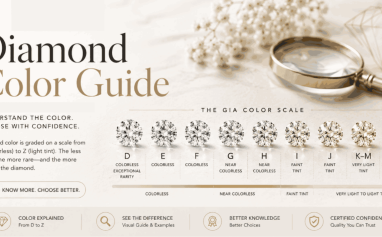
What Diamond Color Actually Measures Diamond color is one of the 4Cs, and it is the one buyers most often misunderstand. For white diamonds, the... Continue reading
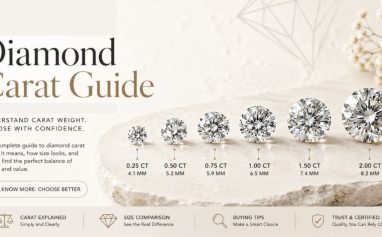
Walk into any jewelry store, and there is one word that gets asked about before anything else. Not cut. Not clarity. Carat.It makes sense. Carat... Continue reading
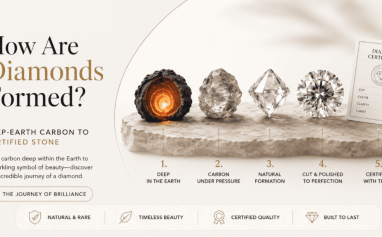
Every natural diamond you have ever seen began as carbon buried between 150 and 700 kilometres beneath your feet, crushed under pressures that would flatten... Continue reading